National Flag
Wallen
Capital
Leader
Sovereign Garivald II Laurant
Capital
Honore
Major Cities
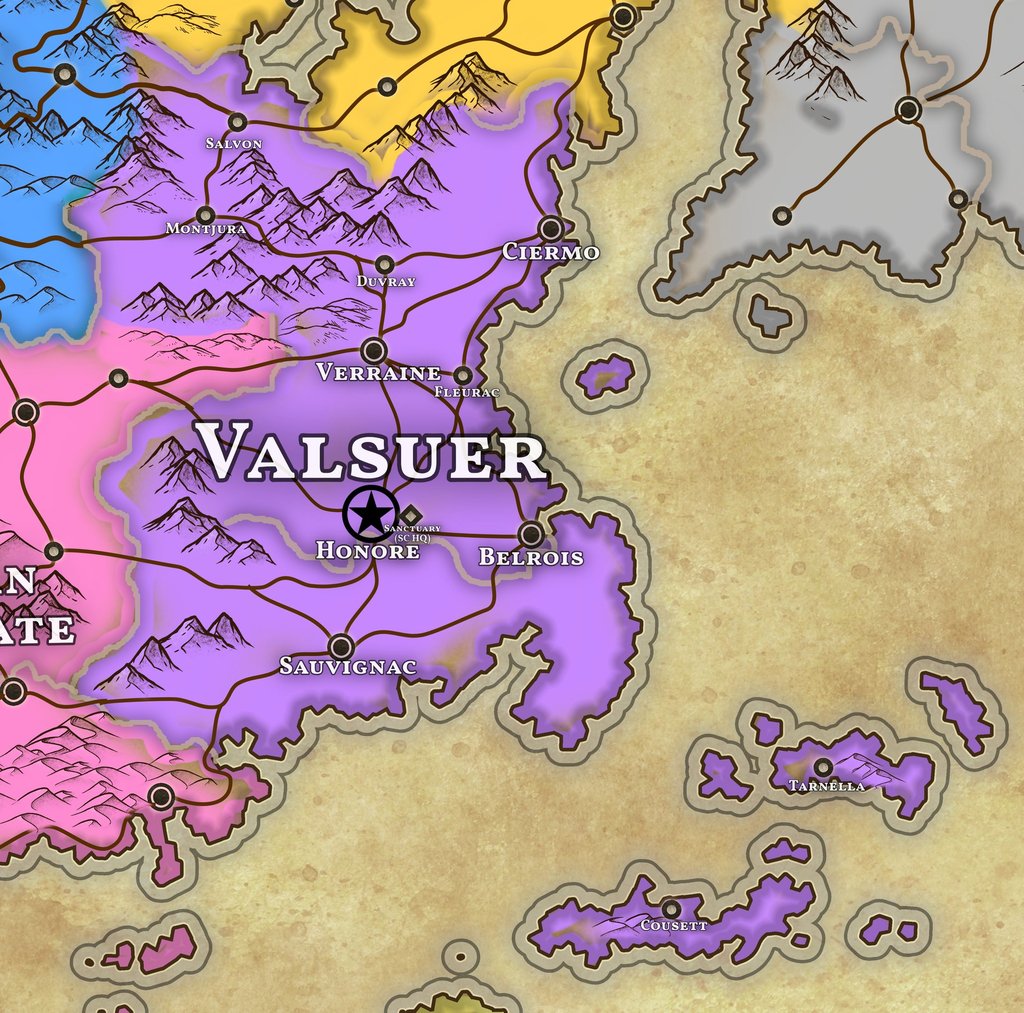
Ciermo
Verraine
Sauvignac
Belrois
Sancturary
Towns
Salvon
Montjura
Duvray
Fleurac
Tarnella
Cousett
Sovereignty of Valsuer


Overview
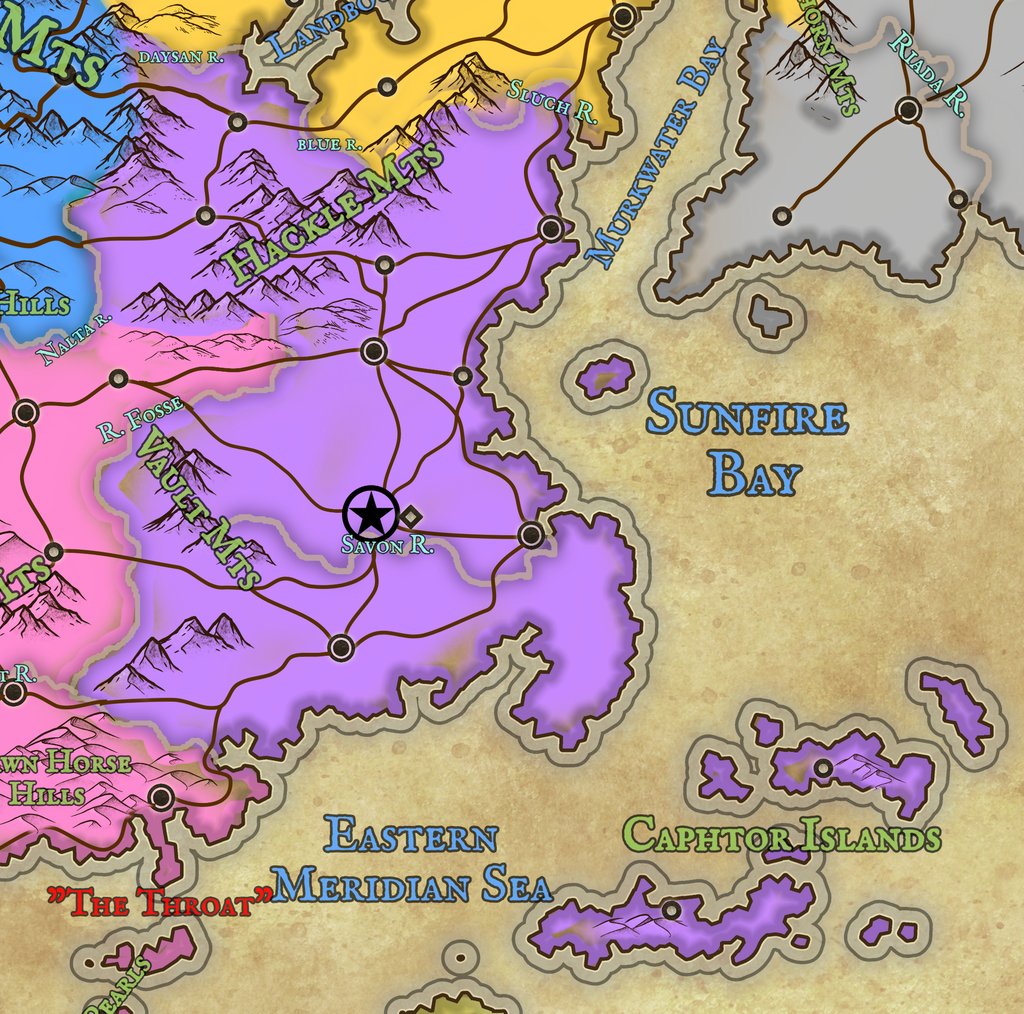
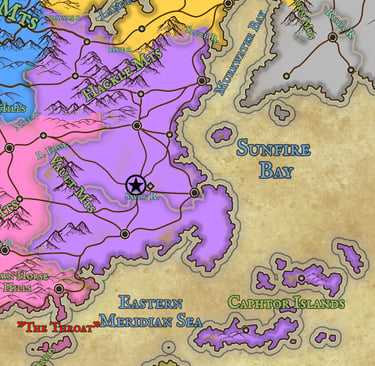
The Valseur Sovereignty is a centralized monarchy located in central Ametria. Once known as the Kingdom of Parleon, the region was governed for centuries by an entrenched aristocracy descended from ancient Salian tribal confederations.
In recent decades, a period of political upheaval, famine, and class unrest led to a collapse of the old regime. Amidst this chaos, the militant Pious Revival—now formalized as the Sanctorian Church—seized control of the region through a religious-military campaign known as the Great Reclamation.
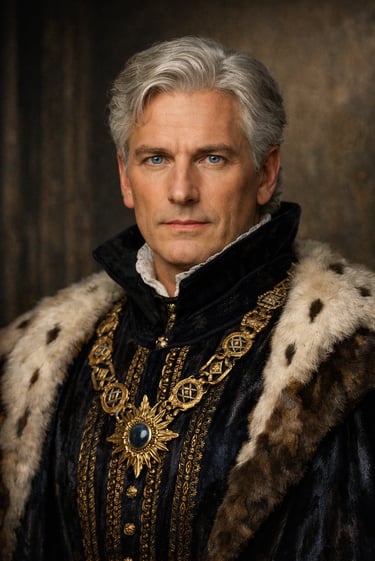
Following their victory, the Sanctorian leadership purged the nobility, installed a "Sovereign" and renamed the nation Valseur, a term derived from ancient Sallian meaning “united”.
Government
Valseur is nominally ruled by the Sovereign, but true power resides with the Sanctorian Church, which monitors civil authority by a shadow hierarchy. The kingdom is divided into four departments, each overseen by a Governor, appointed by the Sovereign.
Day-to-day governance is managed by the Tribute Senachel, a high official responsible for taxation, administration, trade policy, and oversight of guilds. Each department also contains a shadow ecclesiastical hierarchy headed by a Prelate, who ensures local compliance with Church doctrine and monitors all civic governance.
Judicial authority is both secular and religious. There are local civil and criminal courts as well as Sanctorian Tribunals, which act as both religious and legal courts. The Tribunals are empowered to conduct investigations, issue judgments, and impose penance or exile without recourse to appeal.
Economy
Valseur’s economy follows a guild-based structure with a modest and growing freecrafters (non-guild members) class.
Guild System
Most trade and craft, within Valseur, is conducted under the authority of officially chartered guilds.
Each guild is required to tithe a portion of its income directly to the Departmental Prelate, and in return receives spiritual licensing and protection. Guilds are responsible for:
Maintaining quality standards for goods
Policing their own membership
Providing apprenticeships
Major guilds include the Guild of Bakers and Millers, Clothmakers Guild, Metalsmiths Guild, Stonewrights and Masons Guild, and the League of Licensed Merchants.
Taxes and Levies
All economic actors—peasants, merchants, guilds, and transporters—are subject to multiple layers of taxation and tithing:
Civic Dues – Levies collected by the Tribute Senachel to fund roads, fortresses, and state infrastructure.
Port Levies and Market Stamps – Fees required to enter or sell goods in designated trade towns such as Sauvignac or Verracine.
Licensure Fees – Annual payments required to retain a guild license or market stall.
Failure to pay tithes results in the placing of one’s business under Interdict, a form of embargo that bars the individual or establishment from conducting legal commerce.
Trade and Goods
Valseur trades primarily in grain, wine, wool, textiles, metal goods, and blessed manuscripts.
Grain and produce flow from the fertile lands around Montjura and the southern plains.
Wine and spirits, carefully regulated, are exported under Church seals to ensure moral purity and correct blessing.
Wool and dyed cloth, especially from Fleurac, are popular domestic staples and heavily tithed.
Metal goods, such as wheellock pistols, sword hilts, and reliquary fittings, are produced in Ciermont and surrounding areas.
Scriptoria in Belrois produce theological works, holy scrolls, and illuminated manuscripts for internal distribution and religious gifting.
Coinage is minted in Honore, bearing both the seal of the Crown and the emblem of the Sanctorian Church. Common denominations include:
Sovereign – High-value gold coin stamped with the visage of the Sovereign.
Script – Trade coin marked with a Sanctorian verse
Religion and Culture
Culture
The culture of Valseur is a product of profound transformation. Once known as Salia, the region was home to flourishing arts, knightly traditions, and a diverse noble court culture rooted in honor, poetry, and regional customs. However, the rise of the Sanctorian Church and the systematic purge of the aristocracy has radically reshaped the cultural landscape. Today, Valseur is marked by austerity and ritualized behavior.
Dress and Appearance
Clothing in Valseur reflects status and piety. Muted colors, such as grey, brown, black, and deep blue, are worn by most Valseurians. Decorative flair is frowned upon but not illegal.
Men wear long doublets and high collars with religious medallions or modest brooches. Women’s attire are mostly high-necked gowns, long sleeves, and veils are common for unmarried women.
Hair is modestly styled. Beards are encouraged among men of learning or spiritual standing, symbolizing dignity and wisdom.
Family and Gender Roles
Family is considered a sacred institution, designed by the Creator to reflect order and obedience. Marriage is a religious sacrament, arranged through Church liaisons for commoners and coordinated by Tribunal edicts for persons of rank.
Husbands are expected to lead the household spiritually and materially, providing for their wives and children while maintaining strict religious practice.
Wives are to manage domestic affairs, raise children in the faith, and serve as exemplars of modesty and submission.
Children are required to attend Church-run schooling until the age of twelve.
Foreign Relations
Allies: Sanctorian Church, Sanctorian Protectorate and High Realm of Borgravia
Neutral: State of Haaret, Principality of Cavasson, Grand Duchy of Ponterra, Dominion of Tartesso
Rival: Crown of Brenland, Sherrani Commonwealth, Republic of Vonahr, Archonate of Lyncanth