Cosmology and Origins of the Daisonite Faith
Genesis In the Beginning, there were THREE. And THEY dwelt in the Shining City, and THEY were alone in the fastness. THEY created first of all things the Celestial Host, beings of light and beauty, made of thought alone. And they gathered about his throne and listened to the THREE as THEY spoke to them of time and matter. And the world hung in the void, dark and still. "Now I will a great creation," the THREE said unto them, "that shall be within Time, and its fulfillment." And in the secret heart of each of the Host, the THREE spoke a tiny portion of THEIR design, for each understood best only that portion of the thought of the THREE from which he had sprung.
And each member of the Host saw in his mind that the world of which the THREE spoke contained within it that which he loved best, and desired that it might be made real, that he might go and dwell thither. The THREE put forth THEIR hands, and spake the Words of Making, and raised up the land from the waters, and THEY hung the firmament above. And there THEY set the sun, and light shone for the first time on the world. And the THREE threw open the gates of the City.
And the THREE strove and spake again, and brought forth the trees and the herbs of the world, and THEY made all the beasts that swam or flew or crept upon the world. Then the Celestial Host entered Ebonyr became part of it, and it of them. Chiefest among them were five great lords who stood far above their fellows in might and knowledge and the understanding of the design of the THREE. And the names of these five were Azral, Amarnas , Rodein, Talana and Taurusk.
Amarnas turned his thought and will to the airs of Ebonyr, for he delighted in their tumults and in the beasts of the air. It was to water that Rodein turned, and the oceans roared in his voice. Talana took to the earth, and knew all things which crawled upon it or underneath it, and secret ways of mountain, field and valley were hers. Taurusk took up fire, for he saw in it the power of life and vitality.
But the greatest of the five was Azral, for he had a portion of the gifts of each of the others, and he understood more of the thought of the THREE than any of his siblings. Of all the Celestial Host, Azral alone had wandered far in the Endless Void, and there he learned much that was hidden from his brethren and, so he thought in his pride, from the THREE.
And last of all, THEY made the race of man, and set aside bountiful lands for them to dwell in. And the THREE went unto man, and said, “All this land and every thing beneath it are yours; you and your subjects are to serve as stewards. You may enter freely through the gates of OUR City as you will, and you may drink from the Fountain that is found there. Know that the waters of the Fountain are life, and whosoever drinks from that Fountain shall not die. But you must swear fealty to US, and whenever WE call you to service, you must heed OUR call. And you and all men must stay within the lands WE have given you.”
And man swore fealty to THEM, and all of the men that were on the world also swore fealty to the THREE, and there was great gladness, for there was no toil or pain in those days.
And the THREE charged the five celestial lords with guarding the gates of the City, and with watching the ends of the world, and the secret places in the earth. But Malbor was filled with a lust to possess all of Ebonyr, and he told his brethren "I am eldest, and thou knowest that I see farthest of we five. Therefore I shall be thy king, and order all things as shall seem fit to me!" Azral said he had overheard the THREE making the world, and thus they learned the Words of Making, and they grew prideful and covetous. Their hearts were poisoned with jealousy of the THREE and of man.
And the five lords sought to corrupt the work that the THREE had done, and so they went in secret into the world, and they went among many of their celestial brethren, and said unto them, “Lo, do we not also know the Words of Making; why should we not be rulers over this race of men?” And such was the cunning of the five lords that the host that heard these words agreed, and in their pride swore that they would no longer serve the THREE. And the five lords stole into the City, and went before many of the Heavenly Host, and said unto them, “Look how the THREE favor these creatures called man over you, even though you have dwelt in the City since before the making of the world.” And the five said these words, and many guards in the Host were filled with great pride, and they too declared that they would renounce the THREE.
And it came one day that humans, Larith and Anem had strayed beyond the lands of man, and in that place there came upon them the five lords. Now in those days, all of the celestial hosts had armor s that glittered and shone in the sun, and humans were greatly amazed to see such a wondrous sight.
And the five lords spake to them with great guile, and said unto them, “Would you not lie with each as man and wife? Would you not wear your leader's crowns, and dwell in their chambers? And would you not rule over all men?” Larith and Anem agreed that they would want these things to come to pass. And the five lords said unto them, “Return to the lands of men, and speak to your leaders, and tell them to heed not the clarion of the THREE. For if he should heed the call, surely he shall be destroyed” And Larith and Anem did this.
And there came one day war to the Shining City, and at the five lords bidding many in the ranks of the Heavenly Host rose up and took fiery arms against the THREE.
And the THREE sounded the clarion, calling the armies of men to battle. But the men answered not, but rather hid in their houses, and shook with fear. And the clarion sounded again, no man stirred forth, although the sounds of terrible battle could be heard even in the lands of men. And the clarion sounded a third time, but still no man went forth to heed the call.
And in the great battle, the five lords were brought low, and their army was trampled beneath the Host of the THREE. And so the five were defeated and thrown into the Eternal Pit. And those among the Heavenly Host that had rebelled were forced from service, stripped of all radiance and destined to ever after creep upon the earth. They lost their gleaming scales, and were made to lust without satience after precious metals and stones.
And the THREE were wrathful at the disobedience of man, and the THREE closed all of the gates into the City save one; the only way for men to enter through this gate was to die. And at this gate stood a great and loyal captain of the Hosts, which was charged with testing the worth of each petitioner. Those unworthy were turned away, and not allowed to drink from the Fountain.
The Three and the Shining City
Daisonite theology begins with The THREE: a single, all-powerful God expressed in three aspects: Voice, Hand, and Breath. In the beginning, the THREE dwelt in the Shining City and created the Celestial Host. The physical world of Ebonyr was fashioned through the "Words of Making," intended as a realm where humanity would serve as stewards.
The Great Rebellion and the Three Clarions
According to Daisonite scripture, five celestial lords—Azral, Amarnas, Rodein, Talana, and Taurusk—grew prideful and sought to rule over man. They led a rebellion that resulted in a great war within the Shining City. During this conflict, the THREE sounded a clarion call three times for humanity to join the battle. Fearing the celestial lords, humans remained hidden, failing to answer.
In the aftermath, the FIVE were cast into the Eternal Pit, but the THREE closed the gates of the Shining City to the living. Only through death and the testing of a Great Captain may a soul now enter. Daisonism teaches that Daison’s ministry served as the Fourth Clarion, a final opportunity for humanity to atone for their ancestral silence and find the path back to the City’s gates.
Overview
The Daisonite Faith is a monotheistic religion centered on the teachings and martyrdom of the prophet Daison. Followers believe that repentance and humility open the way to salvation, and that Daison’s death sanctified humanity’s path back to the THREE. The faith is diverse and fragmented, with several sects emphasizing different aspects of his life and message.
The World Before Daison
For centuries before his birth, the peoples of Ametria followed the Faith of the Creator, a religion that was introduced by Avaron through visions from the Creator (The THREE were not manifested at that time, however, Avaron was aware of the THREE aspects of the Creator). Its temples became centers of wealth and its priesthood grew powerful. Originally the worship of the The Creator was personal and temples a place of communal prayer and worship as well as silent meditation.
By the sixth century of the First Age, corruption had spread through the high temples. Priests sold pardons, kings used holy rites to sanctify conquest, and the poor were told that salvation was impossible without penance and service to the Church. A hierarchy was established and the Sanctorian Church supplanted the Creators Faith.. Out of this stagnant piety came a man of startling voice and piercing conviction — Daison of Salvon
History
Daison was born in present-day Valseur in the village of Salvon in the extreme northwest of the country. The village is very near the Sherran border. His family made woodcrafts and traveled widely in the region to sell their ware.
Unlike most Valseurians who are Sallian. The family are ancestors of the Charis that settled in Ametria over 1000 years ago along with Avaron. Daison Uncle Levior, was the main merchant for the family. He traveled widely throughout the region selling the families woodcrafts. He also provided postal and banking due to his trustworthiness and circuit travels.
Levior spoke Frisian (main language of Sherran) Sallian (the main language of Valseur) and Graven (the main language of Lyncanth and Vonahr. Like most of the family, he also spoke their ancestral tongue of Charisian.
When Daison was 12, he was allowed to travel with his Uncle throughout the region and become familiar with the local customs, languages and cultures.
His Uncle was was the one that disliked the Sanctorian Church and its theology. He told Daison that the faith had strayed from its true path and the “cult of personality” in the Sanctor had taken over. He said Avaron should come back and set the faith back on the right path.
One night, Daison woke to a vision from the THREE. In this communion, the Voice spoke a truth that had been long buried under church dogma, the Hand moved to show him the spiritual decay in the world, and the Breath filled him with the conviction of a final warning. He was tasked with becoming the "Fourth Clarion"—a living call to atone for humanity's ancient failure to answer the THREE.
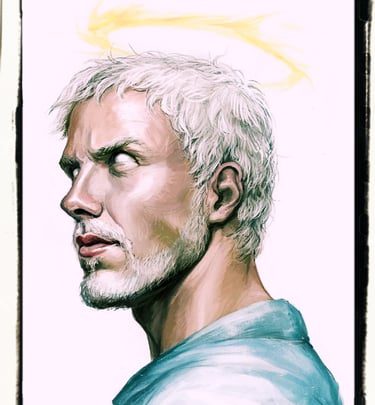
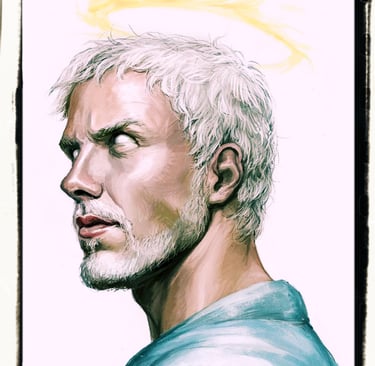
Daison was instructed that the gates of the Shining City remained closed to the proud, but that he was to show humanity how to find the "single gate" through absolute humility and service. Diason was "transformed" during these early vision. His hair turned bright white as well as his eyes. The "Breath" of the THREE constantly surrounded him, which manifested a light glow around his head.
Following this vision, Daison abandoned his trade and began preaching in the market squares of the surrounding region. He taught that the THREE required no gold or cathedrals, only a "broken spirit and a turning of the heart."
Early Life of the Prophet
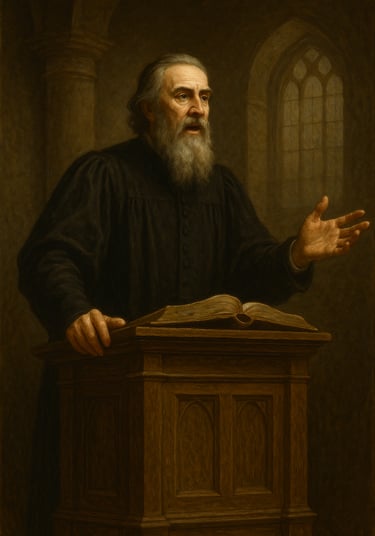
Witnesses later said he began preaching in his twenties. He called people to repent, saying that ritual, good deeds and service to the church meant nothing. Only prayer, humility and following the original true path will the THREE accept you.
“The water cannot cleanse until the heart bends low.” — Testament of the Martyr, Dawn Sermon
The Ministry at the River
For nearly a decade Daison preached throughout Sherran, Vonahr, Valseur and Lyncanth, drawing great crowds. He urged all to prepare, for “the hand of the THREE is near, and His mercy is greater than law.” His followers called him the Voice of the THREE.
He denounced priests and rulers alike:
“You gild the altars but starve the souls that kneel before them. The THREE desires not incense, but the turning of the heart.”
Tens of thousands came to repentance, confessing their sins publicly and following Daisons teachings.
The Arrest and Martyrdom
Daison’s preaching threatened the Sanctorian Church, whose prelates saw their influence slipping in the northern areas of Ametria. When he condemned the Sanctor himself of acting like a god by suppressing the true teachings of the Creator thru Avaron and supplanting those teachings with his own. He described it as “an abomination against the covenant,” Stellarium soldiers seized him.
He was imprisoned in the Stellarium garrison outside Sanctuary City. His followers smuggled in scraps of parchment recording his last teachings. These were later collected into The Testament of the Martyr.
After months of interrogation, Daison was executed publicly by the Circulus drowning wheel.
His last words:
“Into these waters I go, and rise in light of the THREE.”
The day of his death became Martyr’s Day, the holiest observance in Daisonite Faith.
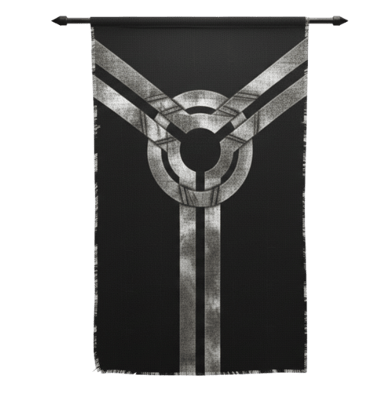
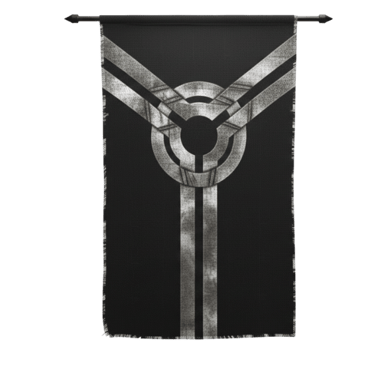
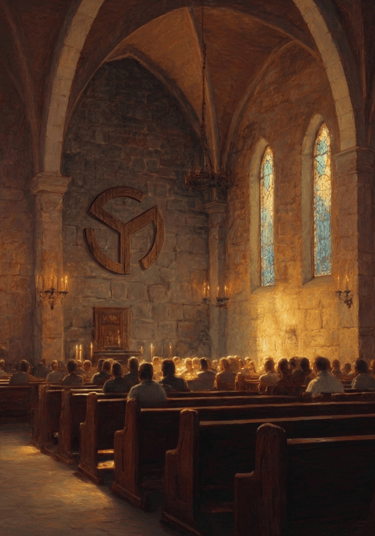
The Circulus Drowning Wheel became of symbol of the new faith.
The Rise of the Followers
After his death, nine of his disciples — remembered as The Nine Witnesses — carried his teachings to every city town and village in Ametria. They gathered converts who rejected Sanctorian corruption and sought a purer way.
Over several decades, small gatherings formed called Steeples, where the Testament and other Daison teaching were read and canonized. These humble communities became the seed of the Daisonite Faith.
Legacy
Today Daison is remembered not as a god, but as the final prophet before the Age of Grace — the man who stood against the Sanctorian Church and called the world to cleanse itself and repent and follow the true path of the Creator, The THREE.
His drowned voice became the song of a new faith, simple and fierce:
“No man is too stained to be made clean; only pride keeps him dry.”
Schism and Growth
As generations passed, interpretation split:
Purists only follow the Testament and no other texts.
Penitents glorified his suffering, adding disciplines of fasting and silence.
Passionists celebrated his death as victory over sin.
Pathists re-imagined his journey as a model for moral life and choice.
Despite division, all agreed that repentance and humility were the true path to the THREE, and that Daison’s martyrdom opened the way for personal communion without priestly mediation.
Core Beliefs
Nature of the THREE: The THREE remain active in the world today. Divine interaction is not a relic of the past but a continuous presence felt through prayer and the "Breath" and “Hand” of the THREE.
The Martyr-Prophet: Daison is viewed as a mortal man, not a deity. His significance lies in his role as the final prophet before the Age of Grace. His suffering and death on the "Drowning Wheel" are believed to have sanctified the path to salvation.
Repentance and Humility: The faith posits that "the water cannot cleanse until the heart bends low." External rituals, tithes, and priestly absolution are secondary to a sincere, internal turning of the heart.
Direct Relationship: Daisonism removes the need for "priestly mediation." Every believer is encouraged to maintain a personal connection with the THREE through scripture study and acts of compassion.
The Paradise of the City: The ultimate goal of the faithful is to be found worthy at the final gate and drink from the Fountain of Life within the Shining City.
Branches
Purists – Emphasize strict adherence to Daison’s words, rejecting later additions to the faith. They view ritual as distraction and insist salvation lies solely in repentance and humility.
Penitents – Focus on acts of penance and bodily discipline to share in Daison’s suffering. They are known for fasting, simple living and humility. Their clothing is Plain, uniform dress—men wear broad-brimmed hats, suspenders, and beards without mustaches; women wear long dresses, apron and head coverings.
Passionists – Celebrate Daison’s sacrifice as a triumph. Their worship is emotional, with singing, weeping, and dramatic retellings of the Daison miracles and sermons. Passionists, along with the Pathists are the only sects that have allow public confession of sin.
Pathists – Stress Daison’s teachings as a “Way” of life. They emphasize moral choices, compassion, and service as the daily path toward salvation.
Sacred Texts
Daisonite scripture is divided into primary accounts of the Prophet and later interpretative works used by specific sects.
Primary Canon
The Testament of the Martyr: A collection of parables and sermons recorded during Daison’s ministry.
The Witness Codex: A narrative of Daison’s life and death as recorded by his nine closest disciples.
The Lamentations of the Witnesses: Poetic expressions of grief and hope written following the martyrdom.
The Hymns of Ashen Light: Songs believed to have been inspired by Daison’s final days in the Stellarium garrison.
Sectarian Texts
The Chronicle of the Nine: Authoritative accounts favored by Purists.
The Passion Chronicle: A dramatized retelling of the Prophet's suffering used by Passionists.
The Rule of Penitence: A manual for fasting and discipline central to the Penitent sect.
The Wayfarer’s Guide: An allegorical text used by Pathists to navigate moral choices.
Worship Practices
Scripture Reading as Central Act – Instead of ornate liturgy, the public reading and exposition of texts like The Testament of the Martyr forms the heart of services. Sermons are considered the most important act of worship.
Congregational Singing – Hymns drawn from The Light of Return or The Path Verses are sung by the whole assembly, emphasizing collective voice over choirs or ritual chant.
Confession in Prayer – Rather than confession to a priest, believers kneel together in prayer, confessing faults aloud or silently, trusting the THREE to hear them directly.
Testimony Sharing – Members rise during worship to give personal witness of repentance, renewal, or answered prayers — reinforcing the idea of every believer as a “witness.”
Breaking of Bread – A communal meal recalling Daison’s last supper with his disciples. Bread and water (or simple wine) are shared, not as a mystery, but as remembrance.rite your text here...
Places of Worship
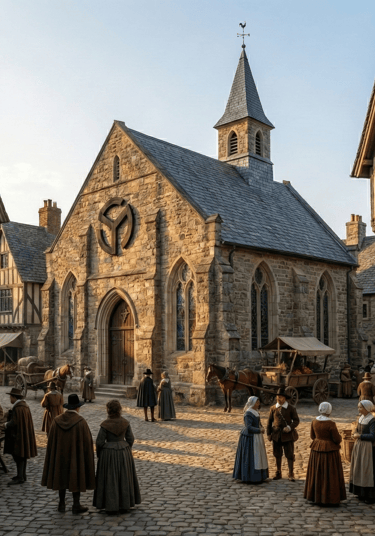
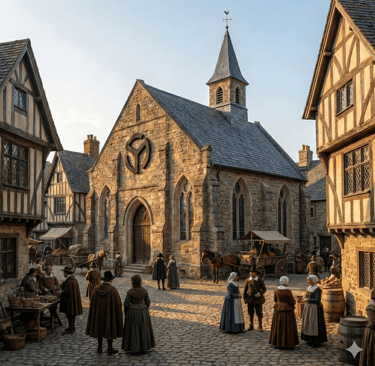
Steeple
Chapel
Personal & Communal Rituals
Governance
The Daisonite Faith is largely decentralized. Congregations often gather around local teachers who interpret scripture and lead worship. Regional councils occasionally convene to resolve disputes, but no single hierarchy unites all branches.
Clergy Titles
Master Reverend
Reverend
Chaplain
Shepard
Deacon
Presiding Elder
Pastor
Minister
Clergy & Laity Practices
Elected Leaders – Congregations choose their Witnesses or Shepherds, rather than accepting a top-down hierarchy. Authority flows from community recognition.
Preaching Rotations – In some sects, elders or lay members take turns delivering sermons, reinforcing the “priesthood of all believers.”
Scripture Study Circles – Weekly meetings where the faithful gather to read, question, and interpret texts together, reflecting Daison’s teaching that truth belongs to all, not just clergy.
Festivals
Martyr’s Day – Anniversary of Daison’s death, marked by fasting until sundown, followed by communal feasting.
Festival of Forgiveness – A week of reconciliation where debts are forgiven, quarrels settled, and offerings made to the poor.
Night of Watchers – Vigil kept to recall Daison’s last night; prayers, storytelling, and song are observed until dawn.
Day of the Covenant – Commemorates the moment Daison gave his final sermon, sealing the promise of salvation through repentance. Celebrated with recitation of the Testament of the Martyr.
Vigil of the Nine Witnesses – Honors Daison’s nine closest disciples or witnesses Each congregation lifts up the names of its own elders and teachers, linking them symbolically to the Nine.
The Great Confession (Passionist Sect only)– A solemn day where entire congregations confess their sins publicly or communally, believed to echo Daison’s teaching that humility brings renewal.
Festival of the Open Door – Celebrates the teaching that death is not an end but a threshold into the Creator’s presence. Families gather at cemeteries to leave lanterns or offerings.
The Passion Fire (Passionists) – A dramatic night-long vigil where the martyrdom is retold with chanting, drumming, and symbolic fire rites.
Purity of the Word (Purists) – A scripture-only observance, where only the Testament of the Martyr is read aloud, with no ritual additions.
Ashen Trials (Penitents) – A day of fasting, silence, and bodily discipline, undertaken to share in Daison’s suffering.


The Circulus Symbol
The Daisonite Flag