Overview
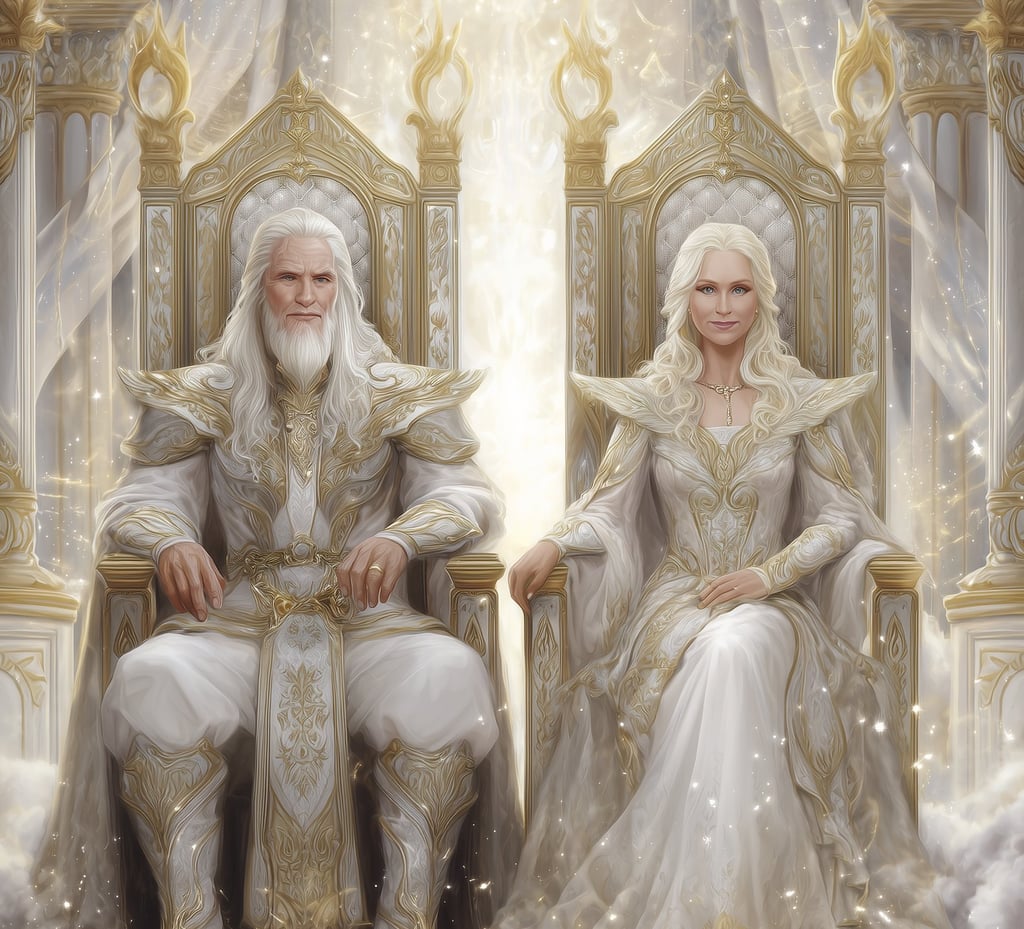
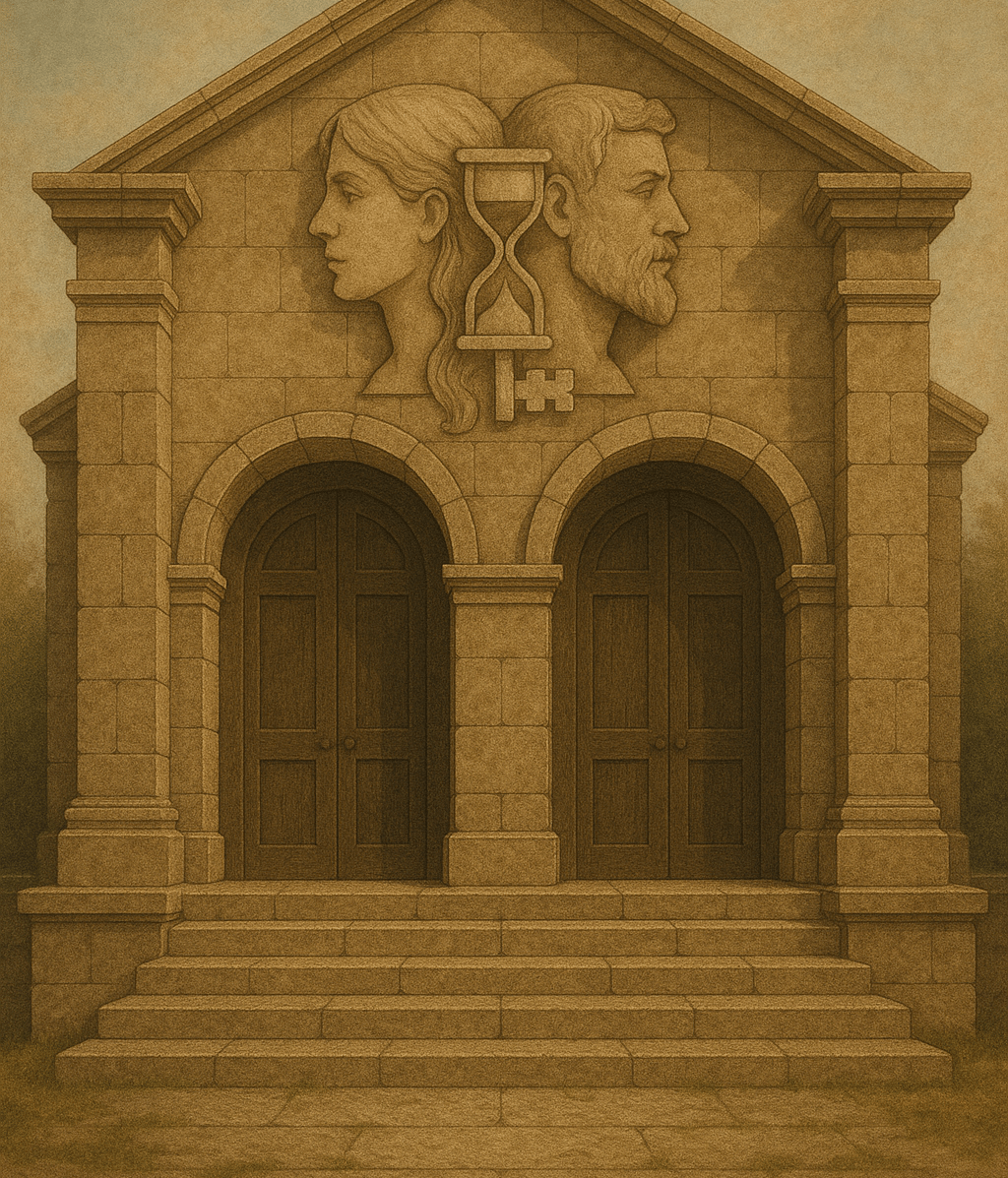
The Faith of the Twins is a widespread dualist religion centered on a divine pair who embody opposing but inseparable forces—beginnings and endings, past and future, choice and consequence. The Twins are invoked together, never separately, and are most commonly depicted as two joined faces, one male and one female. The faith is prominent across Ferrencian cultures, especially in Ponterra, Cavasson and the coastal regions of Lyncanth and Borgravia.
History
The faith is believed to have arisen among early Ferrencian pastoralists who migrated seasonally between coastlands and highlands. Early myth-cycles describe the Twins guiding these movements, marking crucial decision points—when to move, where to settle, and how to reconcile disputes. As trade networks grew, the faith spread along river crossings and caravan routes, its emphasis on choice appealing to mercantile societies.
The Faith of the Twins functions alongside other monotheistic traditions. Some regions emphasize the prophetic, future-oriented aspect; others stress memory, ancestry, and justice.
Core Beliefs
Dual Divinity
The Twins represent the perpetual cycle of turning points in human life. Each act is both a conclusion and an initiation, and the Twins preside over the threshold between what was and what will be. The faithful believe that all decisions echo across time, and the Twins hold dominion over the unseen web connecting these outcomes.
The Turning Principle
Existence is understood as a series of thresholds—doors crossed, vows made, paths diverged, and endings reconciled. The Turning Principle teaches that understanding both origin and consequence is essential to spiritual maturity.
Memory and Foresight
The male aspect is aligned with memory, reflection, and understanding the past.
The female aspect is aligned with foresight, intuition, and the unknown future.
In all rites, the clergy emphasize balance between both forms of wisdom.
Sacred Texts
The Concordance
A compilation of parables and doctrinal teachings laying out the dual nature of the divine and the ethical responsibilities of those who cross “life’s thresholds.”
The Book of Doors
A scriptural cycle detailing mythic passages through symbolic doors—marriage, leadership, betrayal, reconciliation, death—each illustrating how choices reshape destiny.
The Echo Verses
Poetic texts recited during rites of passage, stressing the reverberations of decisions across generations.
Clergy and Organization
Thresholders
Mediators of major life transitions such as marriages, oaths, and reconciliations. They oversee rituals at literal thresholds: gates, bridges, borders, and doorways.
Turnbinders
Scholars and interpreters of fate. They study predictive omens, genealogies, and patterns of history to advise rulers and communities.
Split-Mantle
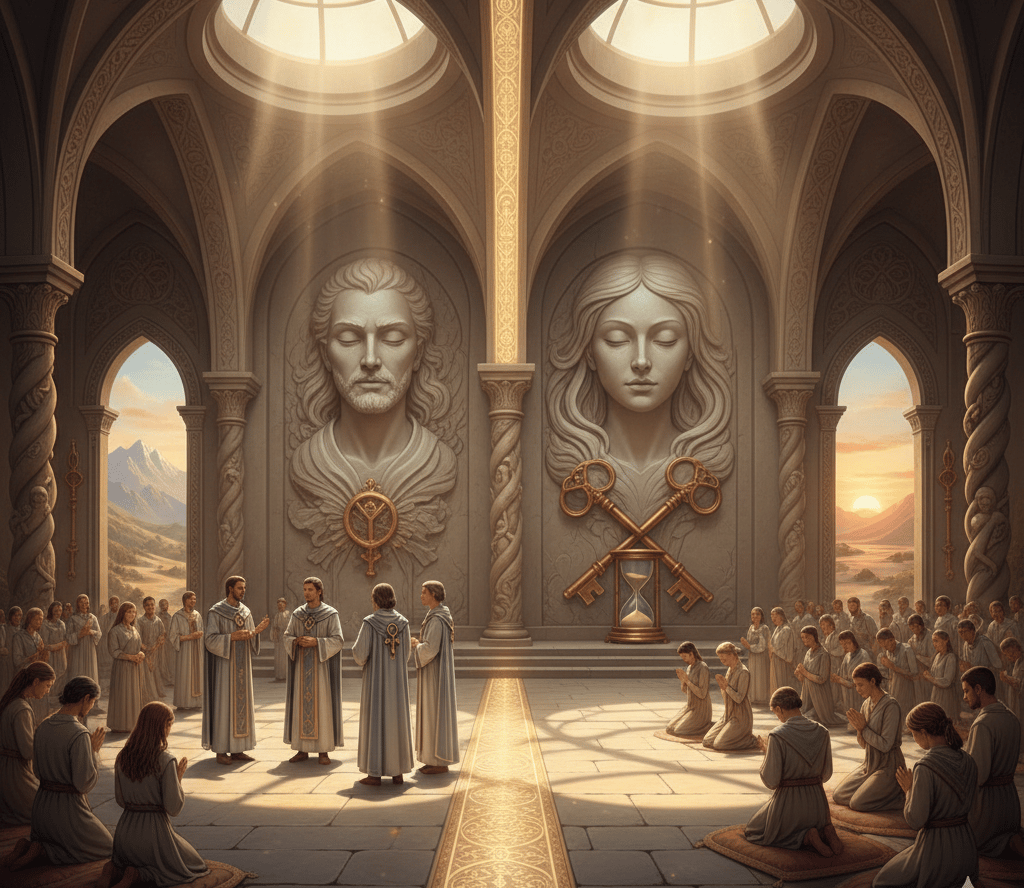
The highest clerical order. Each member wears a cloak divided sharply down the middle—one dark, one light—symbolizing impartiality and balance in judgment.
The faith is decentralized; authority flows from ritual prestige rather than hierarchical command.
Rituals and Practices
Bifurcate Rite
Performed when an individual stands between two significant choices. A Turnbinder guides the supplicant through symbolic doors representing each path.
Twilight Offering
A daily devotion at dusk involving paired candles, one extinguished and the other lit, marking the death of the day and birth of the night.
Doorwake
A communal ritual marking the start or end of major seasons of activity (harvest, campaign, trade voyages). Participants process through two opposing gates built for the event.
Oath-Crossing
A legal-religious act. Anyone swearing a binding oath must step across a marked threshold while repeating a dual-form vow.
Architecture and Temples
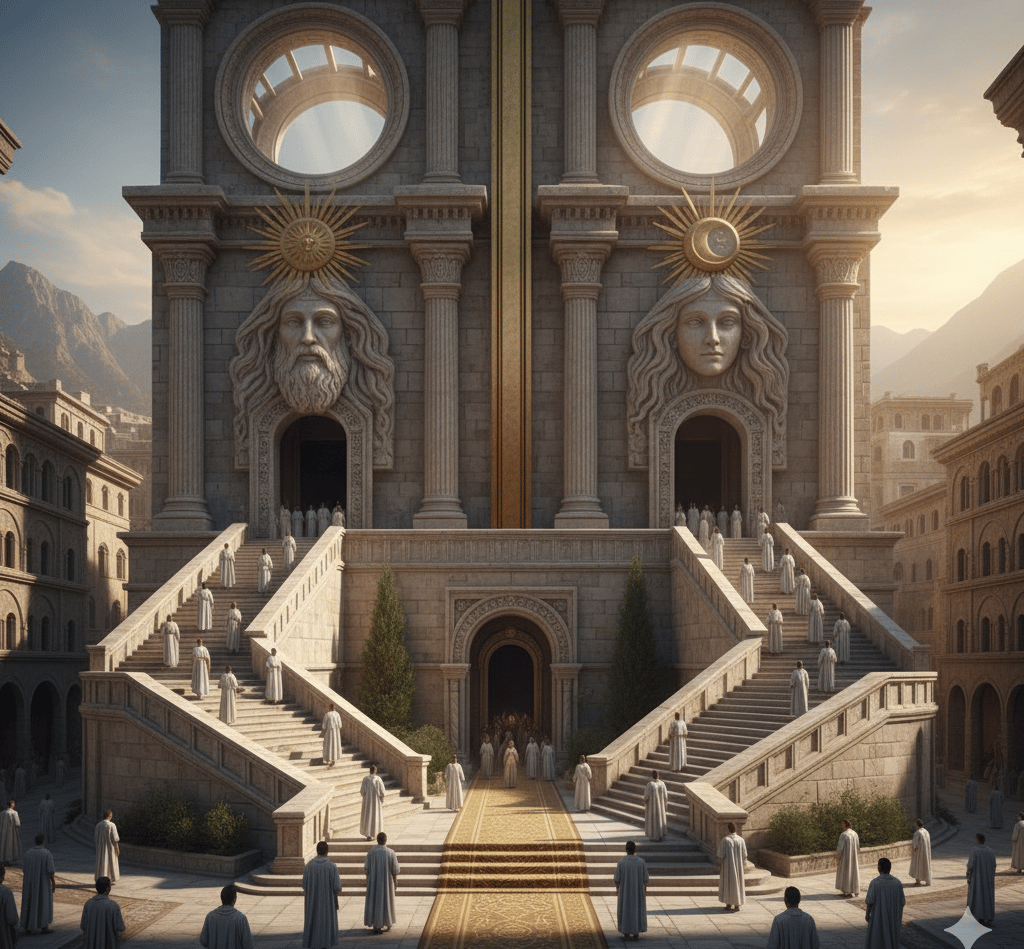
Twins temples are situated at liminal locations—city gates, bridges, border passes, cliff paths, or coastal inlets. Structures feature:
Two entrances facing opposite directions
A central hall divided by a symbolic threshold line
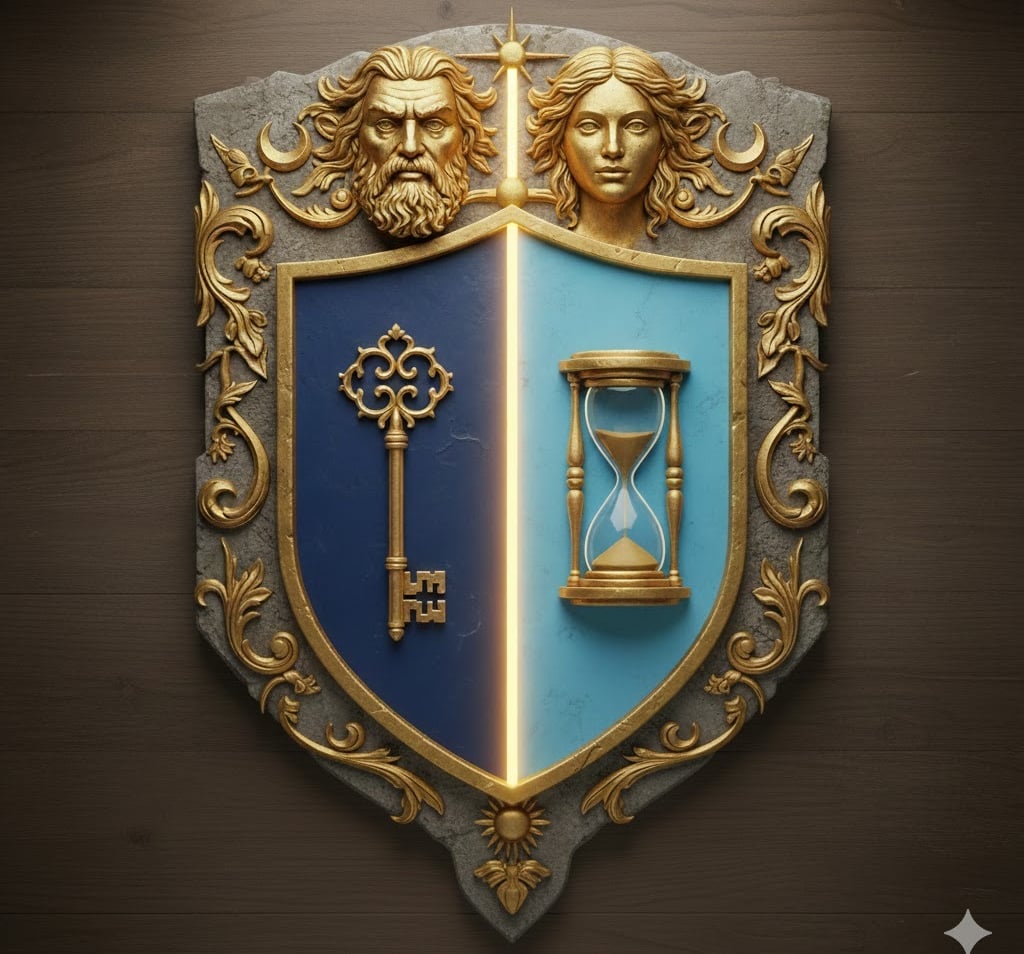
Paired icons: key and hourglass, or the male/female dual faces
Open ceilings or skylights representing the passage of time
Shrines are often carved into doorframes, standing stones, or even town gates.
Symbolism
Dual Faces (male/female): The central icon of the faith.
Key and Hourglass: The authority to open futures and witness endings.
Dual Spirals: One inward, one outward, reflecting introspection and action.
Split Cloak: Worn by senior clergy to embody duality.