Military of Cavasson
Overview
The Cavassonian military has a decentralized origin, but increasingly unified under princely authority. The result is a hybrid force: battalion-based land armies supported by a rapidly professionalizing navy tied closely to commerce and shipbuilding.
The army operates through independent battalions as the highest tactical and operational unit, while the navy is evolving into the true strategic arm of the state.
Command Structure
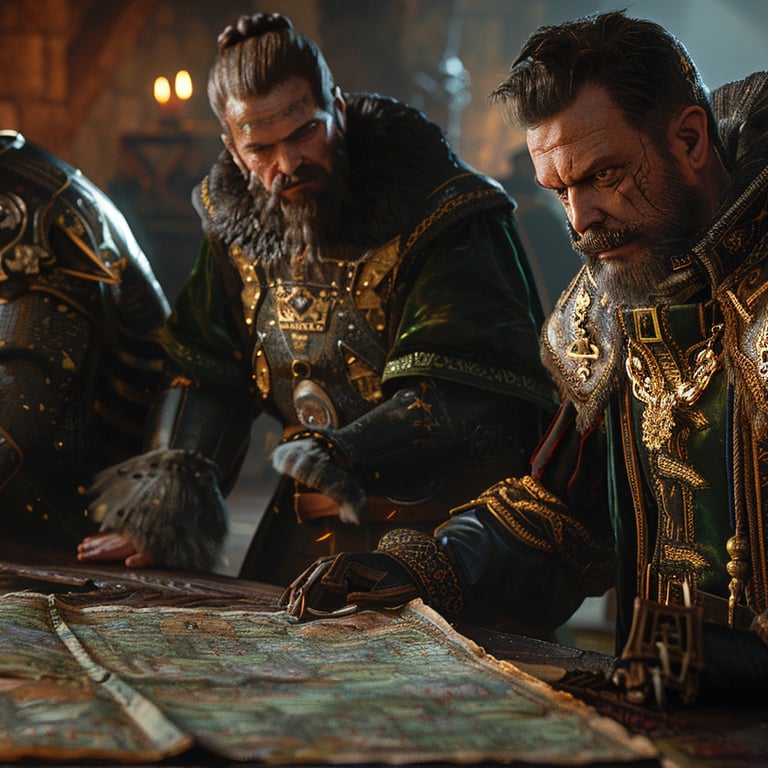
Prince of Cavasson – Supreme commander; now directly appoints senior officers
Marshal of Battalions – Oversees all land forces; coordinates battalion deployments
Admiral of the Eastern Fleet – Commands naval forces and oversees expansion
Guild Admiralty Board – Financial and logistical authority over shipbuilding, but subordinate to the Admiral
This preserves guild influence in funding and supply, while ensuring centralized command in war.
Cavassonian Army
Organization
The Battalion (Battalia) is the highest unit and operates as a self-contained fighting force.
Typical Battalion Structure (400–800 men):
3–5 Line Companies (mixed infantry)
1 Raider Company (light infantry / Almogavar analogue)
1 Missile Company (crossbows, repeating mechanisms)
1 Field Train (engineers, carpenters, supply)
Battalions are:
Raised regionally (Velcria, Droscia, Maltreno, etc.)
Given distinct identities and honors
Deployed independently or in loose coordination
Core Doctrine
Autonomy – Battalion commanders act with broad independence
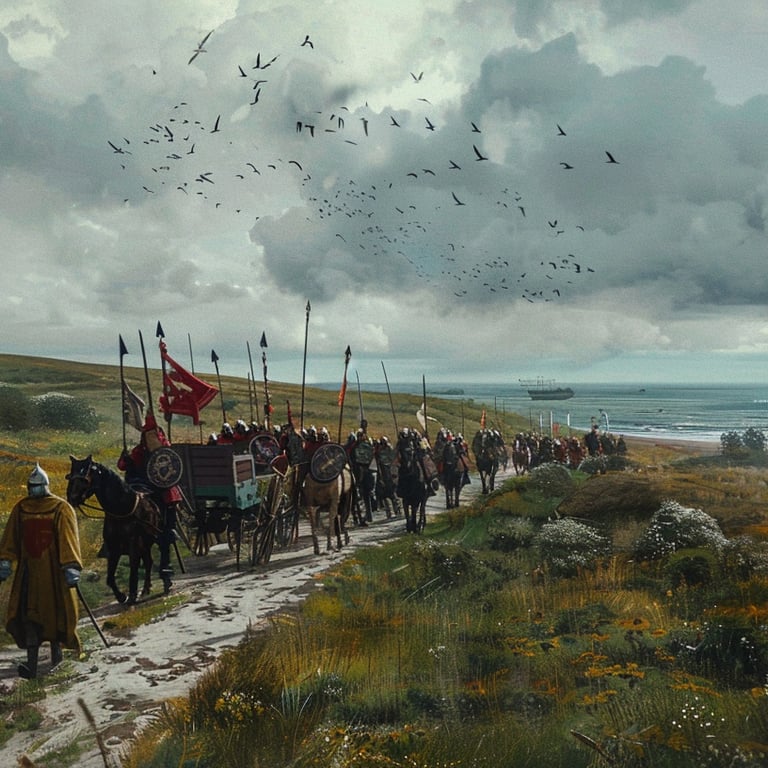
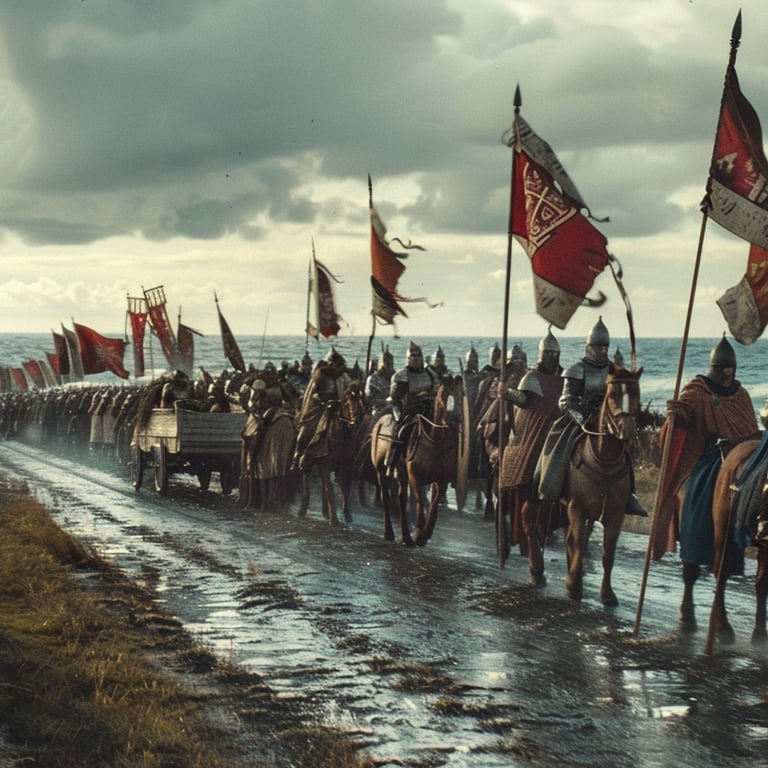
Mobility – Emphasis on fast movement, coastal marches, and flexible formations
Shock & Disruption – Raider companies used to break enemy cohesion before main engagement
Terrain Mastery – Heavy use of forests, hills, and coastal terrain
Elite Troops – Vardari
Light infantry drawn from coastal and frontier regions
Equipped for speed: short blades, javelins, light shields
Used for:
Raids
Ambushes
Night attacks
Known for aggressive war cries and pre-battle rituals tied to the Twins
They are feared across Ferrencia as unpredictable and relentless fighters.
Recruitment
Mix of:
Guild-sponsored soldiers
Professional volunteers
Coastal clans and frontier fighters
Increasing number of career officers loyal to the Prince, not the guilds
Cavassonian Navy
Overview
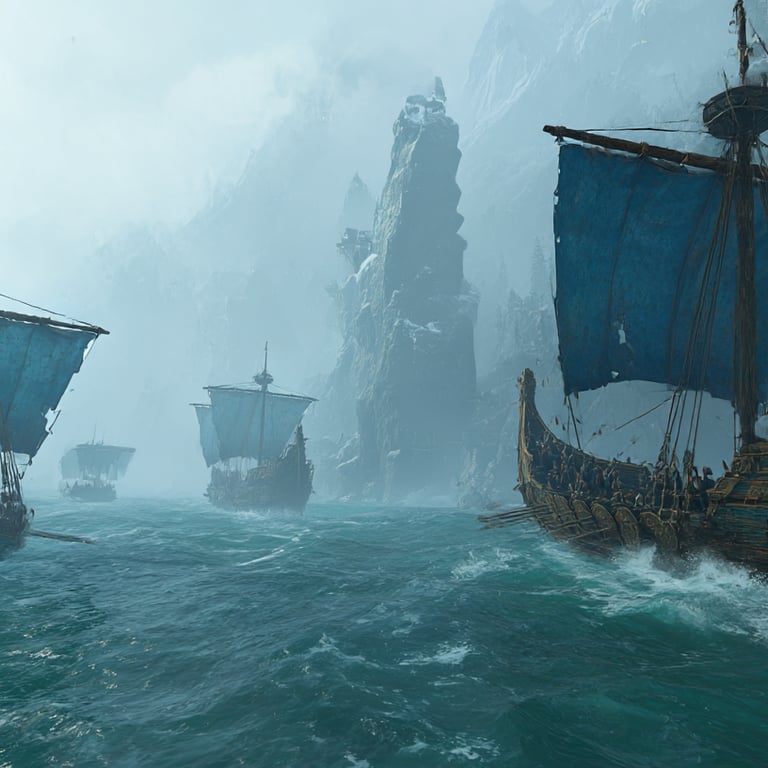
The navy is the fastest-growing arm of Cavasson and the true future of its power. it blends state authority with merchant capability.
Its purpose is not conquest—but control of trade, protection of routes, and denial of enemy access.
Fleet Structure – Eastern Fleet
Carrack Squadron (High Fleet) :Large, ocean-going warships
Command vessels and long-range escorts
Galley Wings (Coastal Fleet)
Fast, oar-driven ships: Used for patrol, interception, and raids
Mercantile Auxiliaries
Naval Doctrine
Convoy Protection First
Merchant fleets are always escorted in contested waters
Coastal Dominance
Control of harbors, straits, and shipping lanes
Strike and Withdraw
Avoid prolonged engagements with superior fleets
Use speed and coordination to isolate targets
Integrated Commerce Warfare
Trade and war are inseparable
Merchant captains often hold reserve naval rank
Shipbuilding and Infrastructure
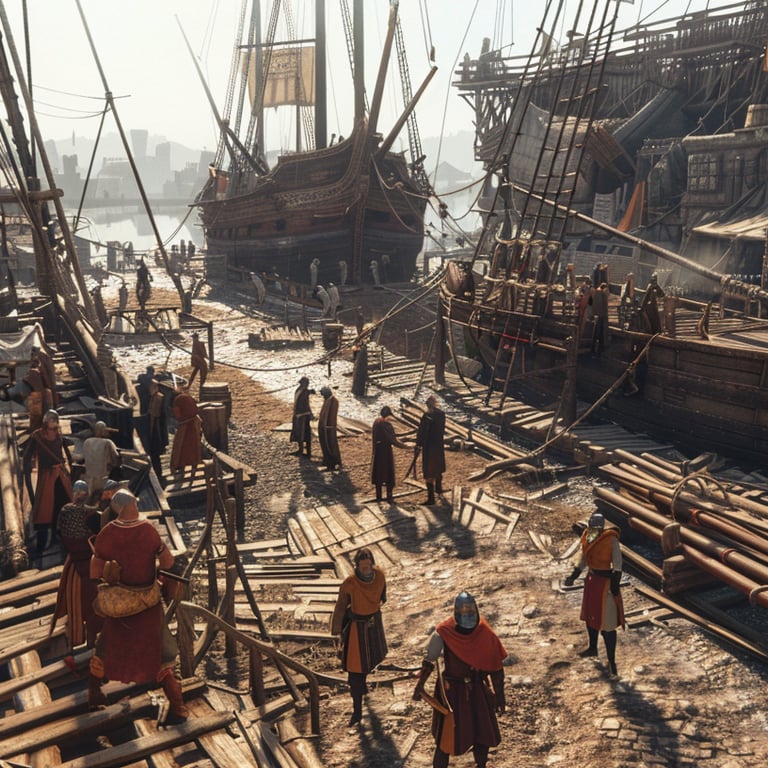
Velcria and Scarravelle expanded into state-directed dockyards
Standardized ship designs emerging under princely oversight
Guilds still build ships, but under naval contract system
Naval Personnel
Professional sailors increasingly replace seasonal crews
Officers drawn from:
Noble houses (Prince-aligned)
Veteran captains
Merchant elites
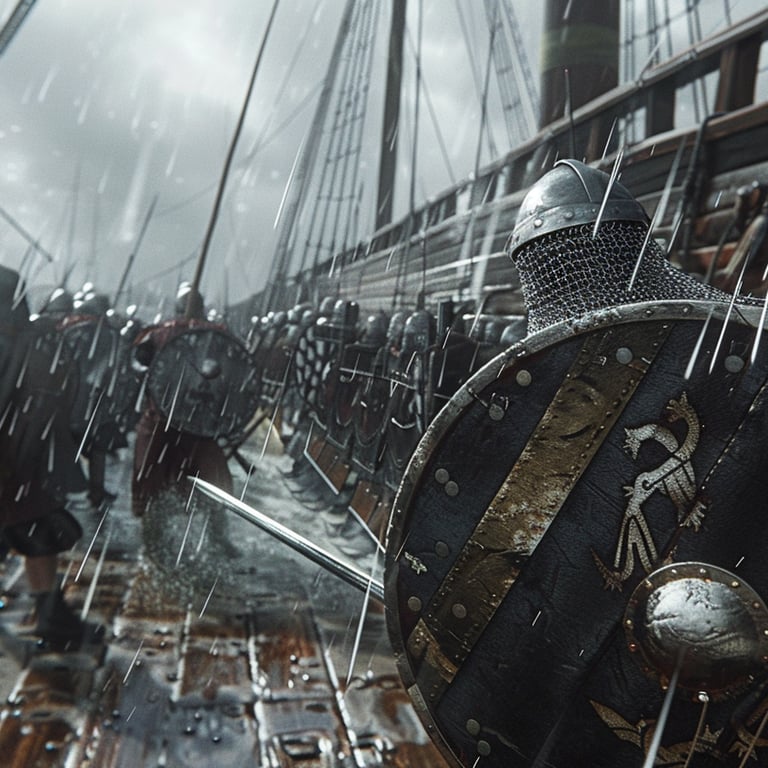
Marines:
Battalion-trained infantry assigned to ships
Specialized in boarding actions and coastal assaults
Army unit that is attached to the Navy
Battalia ORBAT
1. Battalia Velcrian Mareguard
“Wardens of the Eastern Tide”
Origin: Velcria (capital port)
Role: Coastal defense, amphibious operations, fleet support
ORBAT (Approx. 720 men)
Battalion Command (Prince-appointed Castellan + staff) – 40
3 Line Companies (Heavy Coastal Infantry) – 300
1 Marine Company (Boarding troops / naval infantry) – 100
1 Raider Company (Vardari) – 80
1 Missile Company (Crossbow + repeating engines) – 120
Field Train (engineers, carpenters, medics) – 80
Notes - Closely integrated with the navy, Trains regularly in ship-to-shore combat, Considered the most “professional” battalia
2. Battalia Droscian Timberhost
“The Silent Greenwood”
Origin: Droscia (interior forest city)
Role: Field engineering, ambush warfare, defensive fortification
ORBAT (Approx. 650 men)
Battalion Command – 35
3 Line Companies (Medium Infantry) – 270
1 Raider Company (Vardari, forest-adapted) – 90
1 Missile Company (Crossbows, long-range focus) – 120
1 Engineer Company (fortifications, fieldworks, traps) – 90
Field Train – 45
Notes - Masters of terrain denial and ambush ,Known for building fortified camps overnight ,Often deployed inland or in contested border regions
3. Battalia Maltreno Ironband
“Stone Breaks, Iron Holds”
Origin: Maltreno (mining and metalworks hub)
Role: Shock infantry, defensive anchor, siege warfare
ORBAT (Approx. 780 men)
Battalion Command – 45
4 Line Companies (Heavy Infantry) – 400
1 Missile Company (crossbows + early mechanical artillery crews) – 120
1 Raider Company (Vardari, minimal, used for flanking) – 60
1 Siege & Artifice Company (engine crews, sappers) – 110
Field Train – 45
Notes - Heaviest battalia in Cavasson; Forms the core of defensive lines; Slow but extremely resilient
4. Battalia Scarravelle Tideclaws
“From Salt and Shadow”
Origin: Scarravelle (coastal shipyard town)
Role: Raiding, rapid coastal strikes, naval skirmishing
ORBAT (Approx. 600 men)
Battalion Command – 30
2 Line Companies (Light Infantry) – 200
2 Raider Companies (Vardari, elite) – 180
1 Marine Company (boarding specialists) – 80
1 Missile Company (light crossbows, mobile) – 70
Field Train – 40
Notes - Most aggressive and mobile battalia; Frequently deployed by sea; Reputation for brutality and speed
5. Battalia Tavrone Riverward
“The Flow Endures”
Origin: Tavrone (riverport and trade artery)
Role: Logistics security, river operations, rapid redeployment
ORBAT (Approx. 670 men)
Battalion Command – 35
3 Line Companies (Flexible infantry) – 300
1 Raider Company (Vardari, river scouts) – 80
1 Missile Company (crossbows, defensive posture) – 110
1 River Company (boat crews, bridge-builders) – 90
Field Train – 55
Notes - Controls inland waterways and supply routes; Experts in bridging and river crossings; Often supports multiple battalia in campaign
Weapons and Tactics
Small use of Muskets. However due to lack of metalworks and Blackpowder the Cavassonese have decided to advance crossbow technology.
They also use pike, spears, javelin, swords and daggers.
Cavassonian Repeating Crossbow
Common Name: Rivolo (“the turning bow”)
Military Term: Repetra Arbalest
Overview
The Cavassonian repeating crossbow is a mechanically-fed light crossbow designed for rapid, short-range fire. It is not as powerful as a heavy arbalest, but its strength lies in rate of fire, reliability, and ease of use, making it ideal for naval combat, raiders, and battalion missile companies.
It represents the guild-engineered approach to warfare—practical, efficient, and scalable.
Design
Core Components
Wooden stock (often reinforced with iron bands)
Composite bow limb (short, durable, optimized for quick draw)
Top-mounted bolt magazine (holds 6–10 bolts)
Lever-action cocking arm
Simple trigger sear
Operation Mechanism
Operator pulls the lever downward
Draws the string back
Loads a bolt from the magazine
Returning the lever
Locks the string
Seats the bolt into firing position
Pull trigger → fires
Repeat immediately
Performance
Effective Range: 40–70 meters
Rate of Fire: 6–10 bolts in ~15–20 seconds
Reload Time (magazine): 10–15 seconds
Penetration: Low–moderate (not effective vs heavy armor)
Tactical Role
Close-range volleys
Defensive positions
Naval combat (boarding, deck fighting)
Strengths
High rate of fire
Minimal training required
Compact and maneuverable
Excellent in confined spaces (ships, streets)
Weaknesses
Limited stopping power
Reduced accuracy at distance
Vulnerable against armored troops
Variants
1. Marine Pattern Rivolo
Shortened stock
Corrosion-resistant fittings
Used by: Velcrian Mareguard & Scarravelle Tideclaws
2. Field Pattern Rivolo
Standard infantry version
Slightly longer draw for better range
Used in missile companies across battalia
3. Heavy Crank Rivolo (Rare)
Reinforced frame
Slower lever or crank system
Higher penetration
Mostly experimental / siege use
Navy
Carrack Squadron of Cavasson; Flagship Tier (Command Vessels)
CNS Velcria Ascendant
Named for the capital; serves as fleet flagship and symbol of princely authority
CNS Twin’s Horizon
Honors the Faith of the Twins; often carries senior clergy or envoys
CNS Aurelian Tide
A prestige vessel tied to merchant wealth and golden trade routes
Line Carracks (Core Warships)
CNS Ironwake
Known for resilience; often assigned to hold the line in battle
CNS Marrow of the Deep
Heavy-hulled carrack built for long endurance voyages
CNS Storm of Scarravelle
Fast for its class; frequently paired with raiding flotillas
CNS Droscia’s Reach
Named for the interior city; symbolizes unity of land and sea
Escort & Patrol Carracks
CNS Silver Keel
Trade escort vessel protecting high-value convoys
CNS Gilded Oar
Guild-sponsored ship, often used in mixed merchant-military operations
CNS Last Crossing
Assigned to dangerous routes; reputation for surviving impossible voyages
Cavassonian Naval Classes
Eastern Fleet Doctrine: Trade Protection, Coastal Control, and Precision Strike
Cavasson’s navy follows a layered fleet structure, where each class of ship serves a clear role tied to commerce and warfare. Unlike purely military fleets, Cavassonian vessels are designed with dual-purpose utility—warships that can escort, raid, or integrate with merchant traffic.
Capital & Heavy Warships
Carrack (Class: Grand Carrack)
Role: Command, long-range escort, fleet anchor
Displacement: Large
Crew: 180–260
Armament: Deck-mounted torsion or early pneumatic artillery; Heavy crossbow crews
Marine detachment (60–100 troops)
Characteristics; Deep hull, high forecastle and sterncastle; Capable of ocean travel and extended patrol; Serves as flagship or convoy guardian
Use: Protect high-value convoys; Lead naval formations; Act as floating command centers
Medium Warships
War Carrack (Class: Lesser Carrack)
Role: Mainline combatant, escort leader
Crew: 120–180
Faster and more maneuverable than Grand Carracks
Carries smaller marine complements
Use: Escort merchant fleets; Reinforce coastal engagements; Serve as squadron command ships; Fast Attack & Coastal Control
Galley (Class: War Galley)
Role: Interception, coastal dominance, boarding warfare
Propulsion: Oars + sail
Crew: 100–150 (including rowers)
Armament: Forward-facing light artillery
Boarding marines
Characteristics: Highly maneuverable in calm waters; Ideal for ambushes and rapid strikes
Use: Patrol coastlines; Intercept smugglers or enemy raiders; Support amphibious assaults
Light Galley (Class: Cutting Galley)
Role: Reconnaissance, courier duty, rapid response
Crew: 60–90
Minimal armament
Extremely fast
Use: Relay orders between fleets; Scout enemy positions; Chase down small vessels
Hybrid & Auxiliary Warships
Armed Merchantman (Class: Guild Carrack)
Role: Trade + war hybrid
Owned by merchant guilds but registered to the fleet
Lightly armed but can be mobilized quickly
Use: Convoy participation; Emergency naval reinforcement; Economic backbone of naval logistics
Escort Cutter (Class: Keelcutter)
Role: Close escort, anti-raider patrol
Crew: 40–70
Light weapons, high speed
Characteristics: Narrow hull, shallow draft; Operates close to larger ships
Use: Screen convoys; Harass enemy ships; Protect harbors and approaches
Specialized Vessels
Marine Transport (Class: Troop Carrack)
Role: Transport battalia elements
Carries 200–400 troops
Minimal armament
Use: Amphibious operations; Rapid redeployment of battalions; Reinforcement of coastal cities
Siege Barge (Class: Stone Barge)
Role: Coastal bombardment and siege support
Slow, heavily reinforced
Carries large mechanical or pneumatic artillery
Use: Harbor sieges; Shore bombardment; Defensive emplacements
Rivercraft (Class: Tavrone Barge)
Role: Inland transport and patrol
Flat-bottomed
Operates on rivers and estuaries
Use: Supply movement; River security; Integration with Tavrone Riverward battalia
Fleet Structure (Typical Deployment)
A standard Cavassonian task force might include:
1 Grand Carrack (flagship)
2–3 War Carracks
4–6 Galleys
2–4 Keelcutters
3–5 Armed Merchantmen
This creates a balanced force capable of:
Defending trade
Engaging enemies
Sustaining long operations
Naval Identity
Cavasson’s fleet is defined by:
Commerce-first warfare – ships exist to protect wealth
Guild integration – merchants are part of the war machine
Flexibility – ships can shift roles quickly
Controlled aggression – strike hard, withdraw fast
Strategic Direction
The navy is evolving toward:
Standardized ship classes (reducing guild variation)
Larger standing fleets under princely command
Increased marine integration with battalia
Potential rivalry with Ponterra for regional dominance