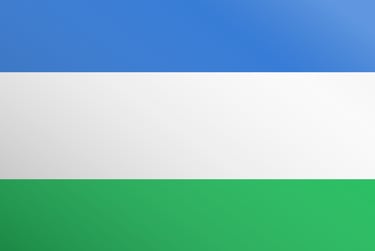
National Flag
Wallen
Capital
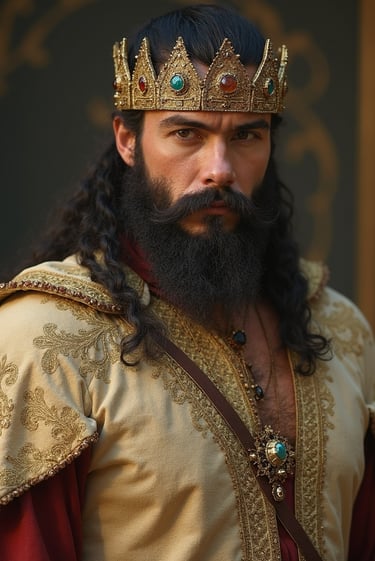
Leader
Grand Duke Claude Cordaro II
Capital
Ponterra City
Major Cities
Ardovena
Calmira
Towns
Renella
Montarza
Garrota
Tylos
Cortina
Grand Duchy of Ponterra

Overview
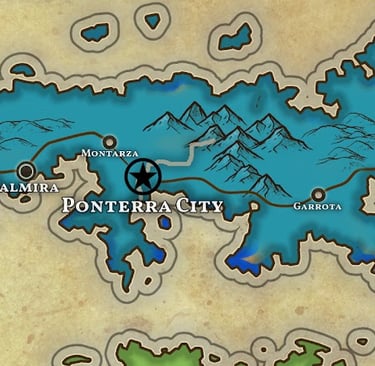
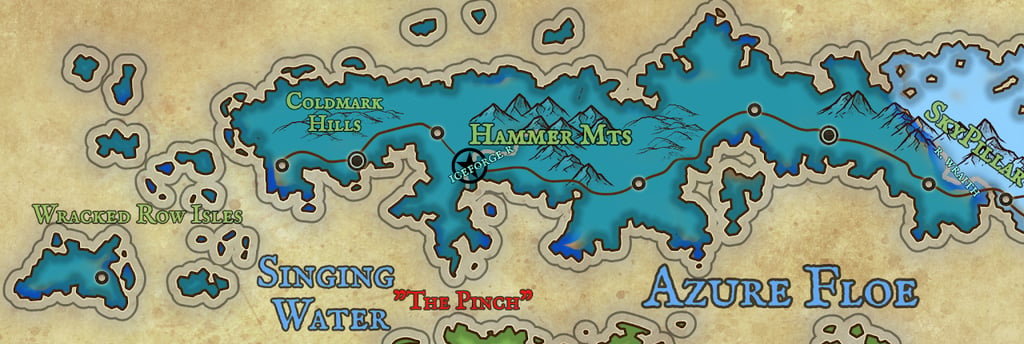
The Grand Duchy of Ponterra is located in the western part of Ferrencia Island. Known for its shipbuilding and fishing industries, Ponterra is a prominent power within the region, boasting a strong cultural identity and economic influence. Its capital is Ponterra City
Etymology
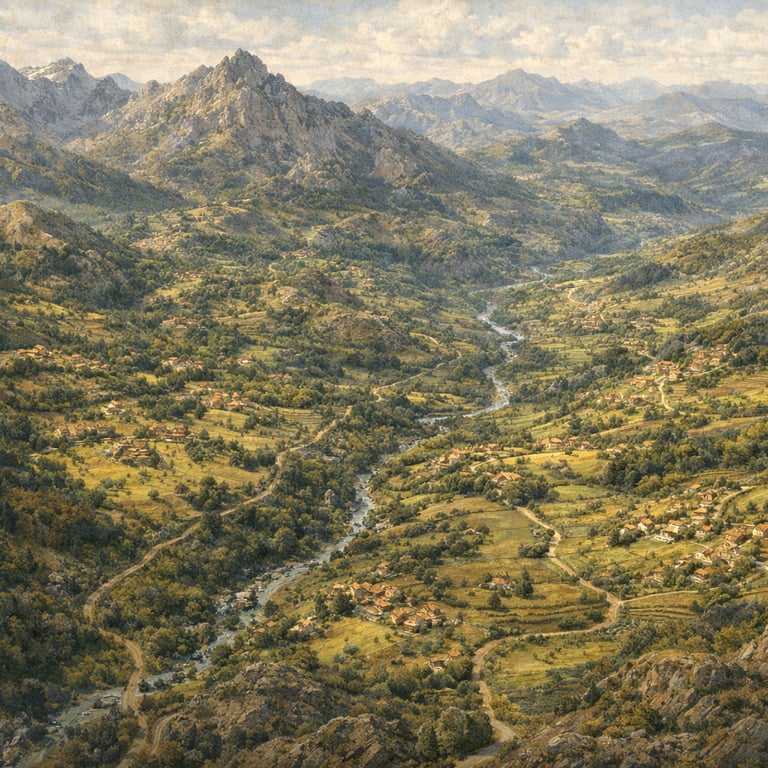
The name Ponterra is believed to derive from the Ferrencian words ponte (bridge) and terra (land), referencing the many ancient stone bridges that span the duchy's river systems. These crossings were vital to the region’s development, giving rise to Ponterra's identity as a “land of crossings” — both literal and metaphorical — between the coast and the Ferrencian interior.
Government
The Grand Duchy of Ponterra functions less like a traditional feudal monarchy and more like a Maritime Merchant Republic controlled by an oligarchic syndicate. Because the title of Grand Duke is not hereditary, the government operates as a "Corporate Duchy" where the Cordaro Family (the "Cordata") ensures that political power remains a tool for economic dominance.
In this system, the "Grand Duke" is essentially a Chief Executive Officer elected for life (or until "retirement") by a board of family heads and stakeholders.
The Grand Council (The Board of Directors)
The true power does not lie with the Grand Duke alone, but with the Consiglio dei Capi (Council of Heads).
The Cordaro Hegemony: As the ruling Cordata, the Cordaro Family holds the "Golden Vote." They control the ropes, the rigging, and the naval logistics, meaning no ship leaves Ponterra without their say-so.
The Family Seats: 11 Cordata's hold seats based on their "Share" of the national revenue.
The Arbitration: The Valastro Family (The Fixers) usually acts as the "Secretariat," ensuring that the Grand Duke doesn't favor his own bloodline too heavily over the interests of the other 11 families.
The Executive: The Grand Duke
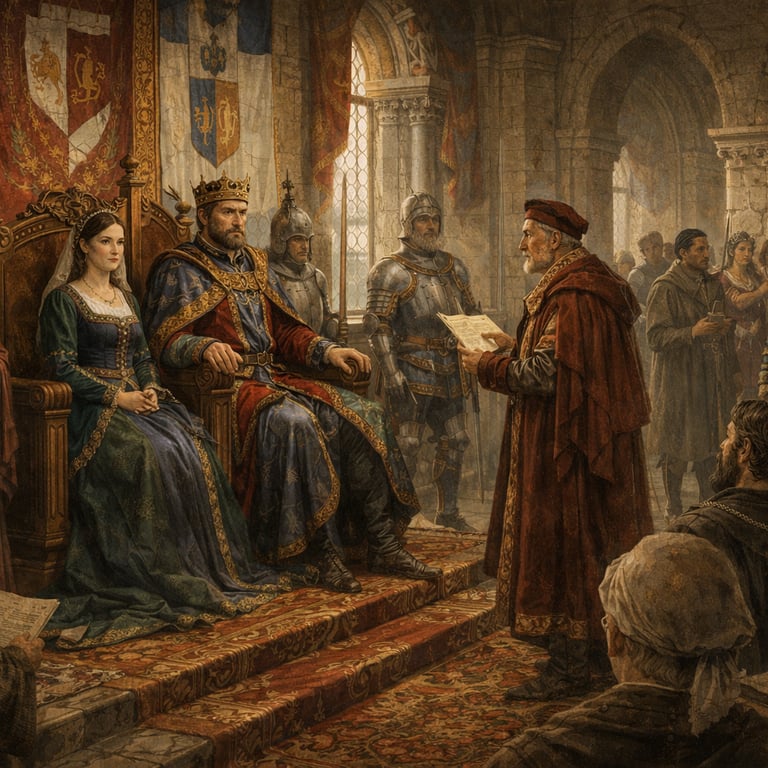
The Grand Duke is a figurehead of stability and the ultimate arbiter of the Twin-Laws.
Selection: When a Grand Duke dies, the Consiglio meets in a "Twin-Conclave." They must choose a candidate who is perceived as "fair"—often a senior member of a mid-tier family who is heavily indebted to the Cordaro, ensuring they remain a puppet for the Cordata's interests.
The Twin-Captains: To prevent a coup, the Duke is never allowed to lead the military directly. He appoints two Ammiragli (Admirals) from rival families. They must agree on every order; if they disagree, the Duke's guard (the Sentinels) freezes all movement.
The Legislative: The Statutes of the Braid
Ponterra does not have a "Parliament." Instead, it has the Ufficio della Corda (Office of the Rope).
Contractual Law: All laws are written as "Contracts." If the Grand Duchy wants to raise a tax for ship-building, it is presented as a "Business Investment" to the local districts.
The Guild-Tribunals: Legal disputes are handled by judges who are also Thresholder of the Faith of the Twins. They determine if a "bond" was broken. Punishment is rarely prison—it is usually "Seizure of Assets" or "Social Exile" (being declared "Dry Wood").
The Administrative Structure
Ministry of Timber (L’Ufficio del Bosco)
Managed by the Vultoro Cordata; dictates logging quotas to ensure the island isn't deforested.
Naval Admiralty (La Grande Armata)
Managed by the Navarro Cordata; the state's "official" navy, though it's mostly a collection of family-owned galleons.
The Treasury (La Banca Ombra)
Managed by the Bancariolu of the Cordaro; handles the "Two Ledgers" (the public tax and the family "tribute").
More information on the Cordata's of Ponterra
Economy
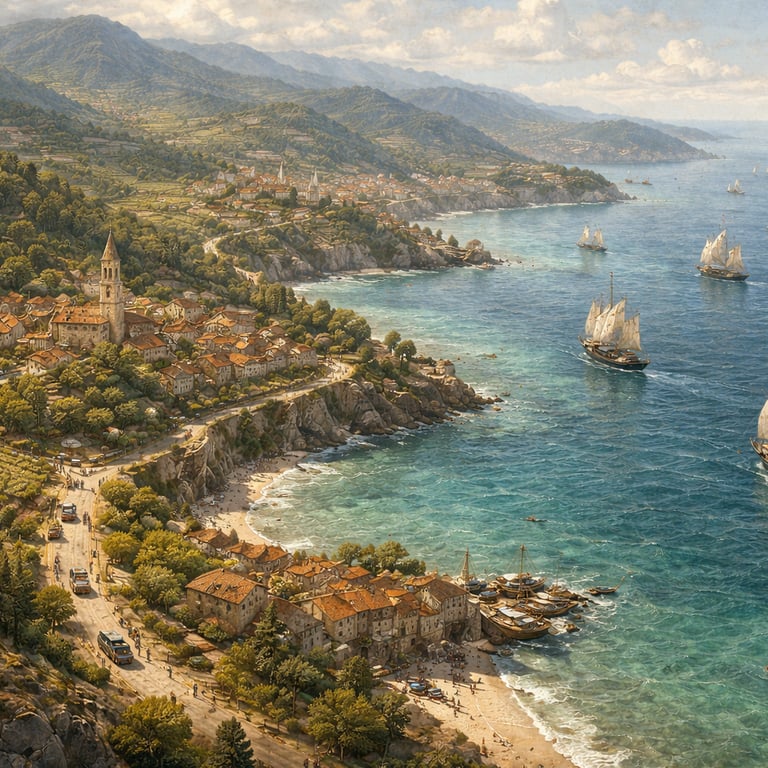
Ponterra’s economy is based upon the sea, benefiting from fertile fishing areas, extensive trade routes, and thriving artisanal industries.
Ardovena is a center for textile production, renowned for its dyed wools, patterned weaves, and ship sails. Montarza is famous for its forges and precision metalworks, including ship fittings, anchors, and naval arms. Calmira serves as a strategic naval base and military training center.
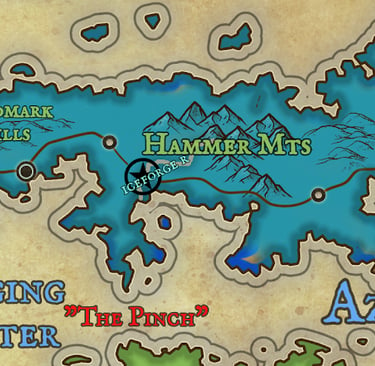
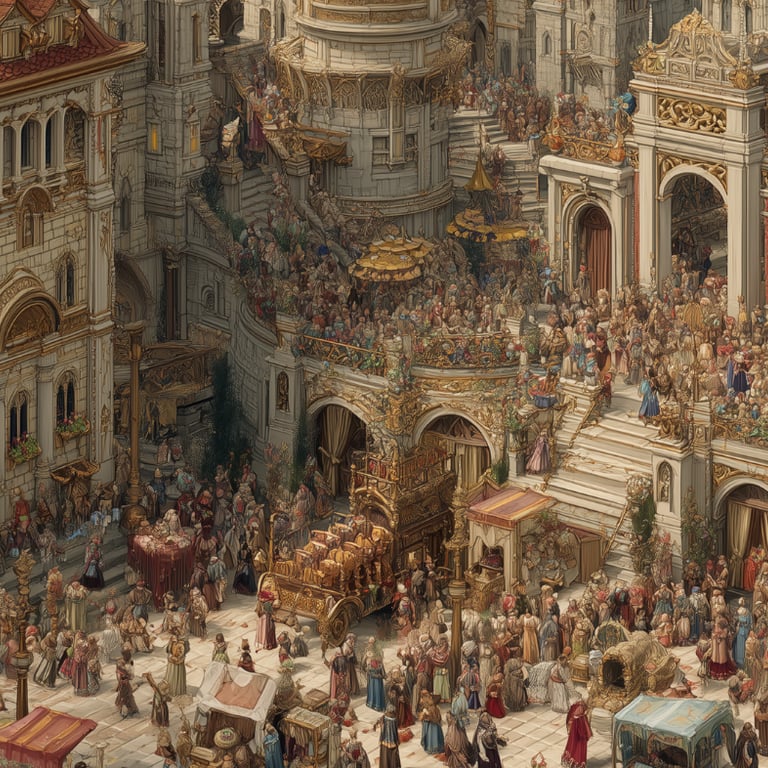
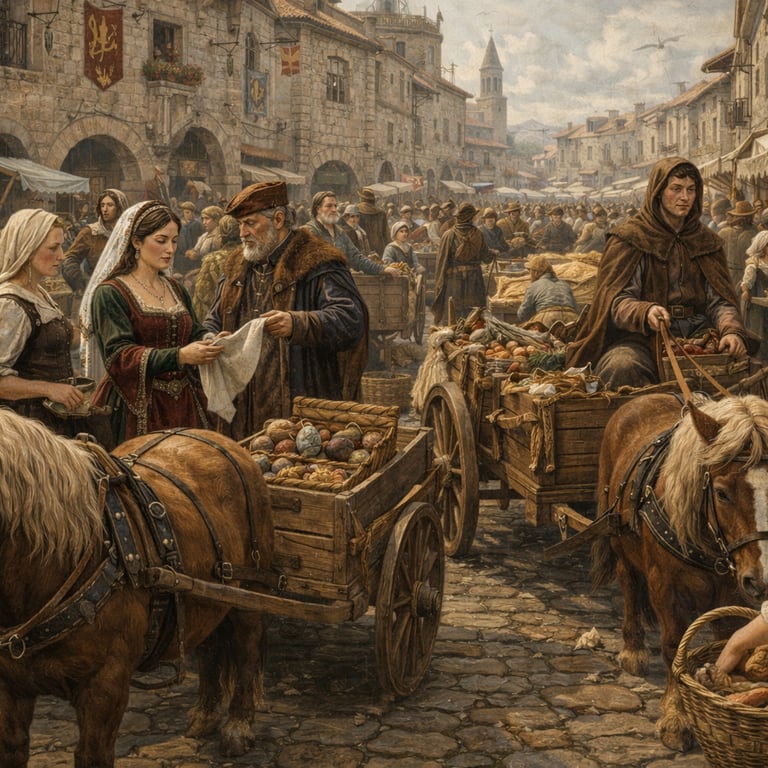
Ponterra City itself is a major commercial hub, hosting seasonal guild fairs and maintaining a harbor on the Iceforge River, which allows for barge traffic and intercoastal trade. The Duchy mints its own silver-backed currency, the ponterrine, which is accepted in foreign markets, particularly in Cavasson and and Vonahr.
Religion and Culture
The Faith of the Twins is the dominant religion, deeply woven into Ponterran identity. Temples sit at the mouths of harbors, between warehouses, or atop cliffs overlooking major bays. Clergy walk among dockworkers, officiate at naval launchings, and even bless contracts aboard ships. However, the Daisonite Faith has converted some areas in western Ponterra.
Key customs include:
The Doorwake Festival: All gates, doors, and ship hatches are left open at dawn and dusk on a single day each year. Ships are decorated with twin ribbons and prayers are read over the sea.
The Bifurcate Rite: Young men and women undergo this ceremony before joining a guild, the military, or taking command of a vessel. It is seen as a choosing of one’s path—and a commitment to both memory and destiny.
Oath Stones: Found in town centers and port edges, these are polished dual-faced stones where captains, couples, and judges make public vows.
Religious tension is minimal, though small communities of Daisonites—mostly merchants or inland settlers—exist and are tolerated.
Culture
The Ferrencians are a maritime and forest-dwelling ethnic group inhabiting the island of Ferrencia, located north of the continent of Ametria across the Azure Floe. Though geographically isolated, Ferrencian culture is a cornerstone of the Ametrian economic sphere a rigid social structure dominated by the Cordata (syndicate-families), and a profound devotion to the Faith of the Twins.
Etymology and Identity
The name "Ferrencian" is derived from the island’s ancient name, Ferren-Cia (The Iron Shore), referring to the jagged, dark volcanic rock of the southern coast. While the Ferrencians identify as a single nation, their primary loyalty is to the Blood-Bond (Sangue-Vincolo). A Ferrencian does not introduce themselves by their village, but by their Family name (e.g., "I am of the Navarro").
Social Structure: The Cordata
Ponterran society is organized into 11 primary Families, which function as a hybrid of aristocratic dynasties, merchant guilds, and organized crime syndicates.
The Family Unit: While blood relations are the core, "membership" is often extended through business alliances. These units are governed by a Patrinu (Patriarch/Matriarch).
The Braid (Hierarchy): Social standing is determined by a family's "strand" in the national braid. The ruling family (currently the Cordaro) acts as the anchor, but their position is maintained through a complex web of debts and favors rather than hereditary right.
Omertà (The Silence): A cultural code that forbids interference from outside "continental" authorities. Disputes are handled internally through family arbitration; to involve an "outsider" official is considered a "Sin of the Single."
Daily Life and Customs
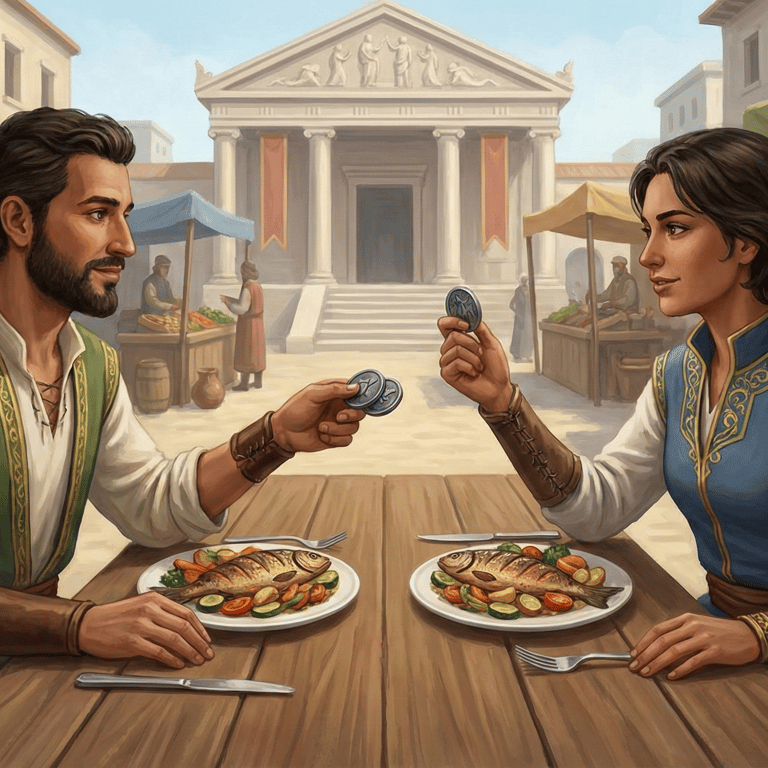
Cuisine: Primarily based on salt-preserved fish, forest game, and citrus fruits grown on the southern slopes. The "Twin-Plate" custom requires that every meal served to a guest consist of two mirrored portions.
Language: A rhythmic, vowel-heavy tongue influenced by maritime signals and foresters' slang. It is common for Ferrencians to speak in metaphors involving ropes, knots, and tides.
The Vow-Coin: Instead of paper contracts, Ferrencians carry iron or wooden coins. Breaking a "Coin-Vow" results in the debtor being declared "Dry Wood"—a social death where no family will trade with or speak to the offender.
Arts and Expression
Ponterran art focuses on symmetry, symbolism, and craftsmanship. Common motifs include bridges, doorways, ships, dual moons, and paired animals. Murals, mosaics, and carvings often depict mirrored scenes—either of past/future, land/sea, or war/peace.
Music emphasizes sea shanties, processional hymns to the Twins, and instrumental marches used during naval parades. Instruments include the tide-horn (a curved brass horn), twin-string lyres, and call drums used to time rowing or prayer.
Poets often write in “paired stanzas,” where each line is mirrored with its thematic opposite. These forms are seen as devotional acts toward the Turning Ones.
Festivals and Holidays
Doorwake Festival (Twins Faith) – Celebrates transition and divine observation of beginnings and endings.
Founding Tide – Marks the unification of the coastal city-states under the House of Darpone. Naval parades and dockside reenactments are common.
Guild Ascension Day – When apprentices are formally accepted into their trades.
Skyblessing – Blessing of the year’s first ship to leave port, often held during the spring equinox.
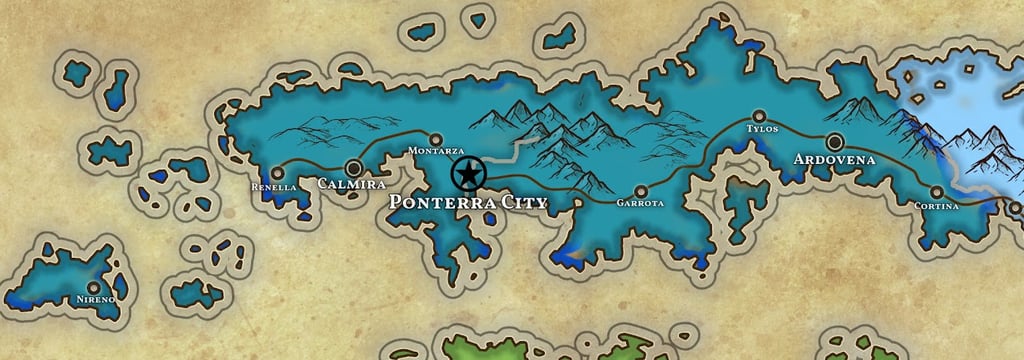
Political Map
Geographic Map
Foreign Relations
Allies: Crown of Brenland
Neutral: Commonwealth of Sherran
Rivals: Principality of Cavasson