Haaret History
This history of Haaret focuses on the internal evolution of its people, detailing the fusion of the Nirethi and Haradi cultures and the structural development of the Triumvirate.
The Era of Divergence
Before the unification, the people of Haaret existed as two distinct mirrors of their environment.
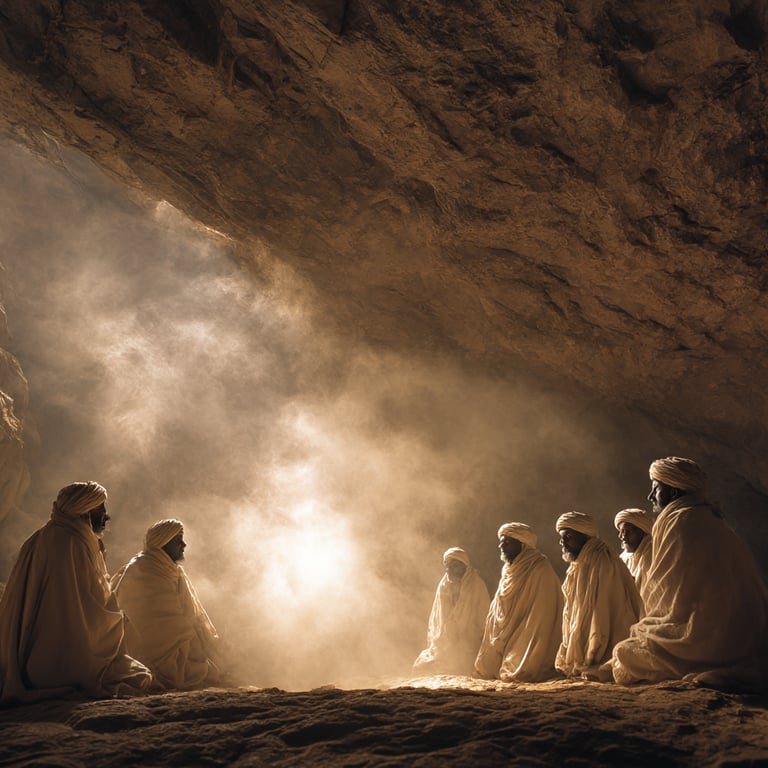
In the southern highlands, the Haradi lived in isolation. Their history began with the "First Witnessing" in the deep mountain caves, where clan elders experienced the initial visions of Sajol. This era was defined by the "word-bearers"—oral historians who memorized the lineages and spiritual laws of the peaks.
Simultaneously, the Nirethi settled the coastlines. They were a people of the tide and the pen, establishing the first harbors and meticulously recording the "Scrolls of Radiance." While the Haradi focused on the endurance of the spirit, the Nirethi focused on the codification of trade and civic duty.
The Virtue Disputes
As the Nirethi pushed inland for resources and the Haradi moved toward the coast for salt, the two cultures entered a period of friction known as the Virtue Disputes. Unlike traditional wars of conquest, these were ideological and territorial standoffs. The Nirethi viewed the Haradi as unrefined, while the Haradi saw the Nirethi’s focus on written law as a lack of true spiritual conviction. These tensions eventually necessitated a formal bridge between the two ways of life.
The Covenant of the Peaks
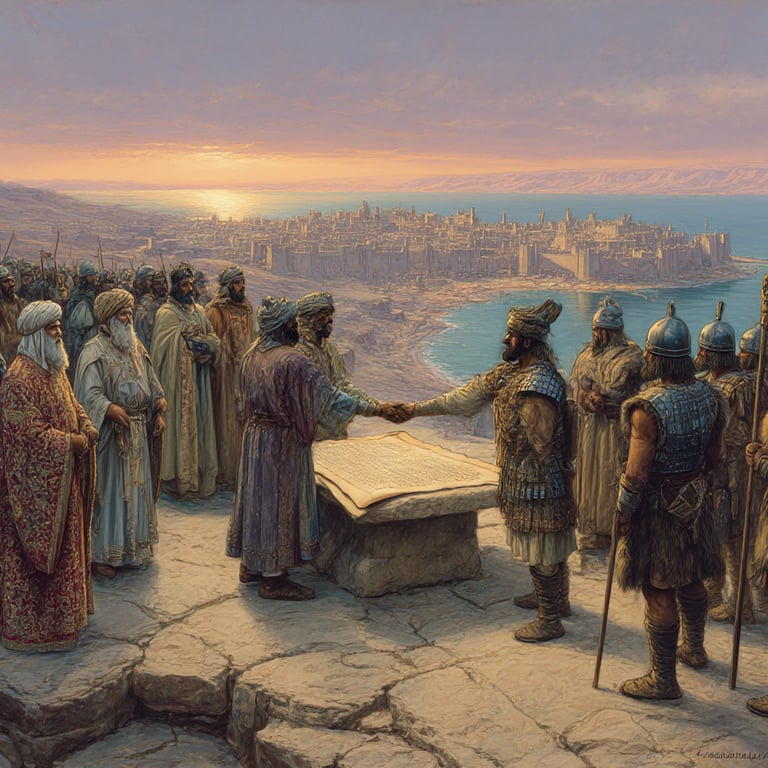
The unification was sparked by the formation of the Magenim. Originally a Haradi mountain watch, the Magenim realized they lacked the logistical infrastructure to protect the pilgrimage routes alone. They invited Nirethi elders to the foothills of what is now Asurim to draft a mutual defense pact.
This period saw the "Literacy Synthesis." The Nirethi introduced the Codex to the highlands, while the Haradi integrated their rhythmic, poetic liturgy into the written law. This created a society where literacy became a spiritual requirement, ensuring that both the sailor and the mountaineer could read the mandates of the state.
The Great Reform and the Triumvirate
As the nation grew, it initially struggled with the centralization of power. After a period where a single High Patriarch held too much influence, the Haradi resistance and Nirethi legalists collaborated to design a system that prevented any individual from becoming a monarch.
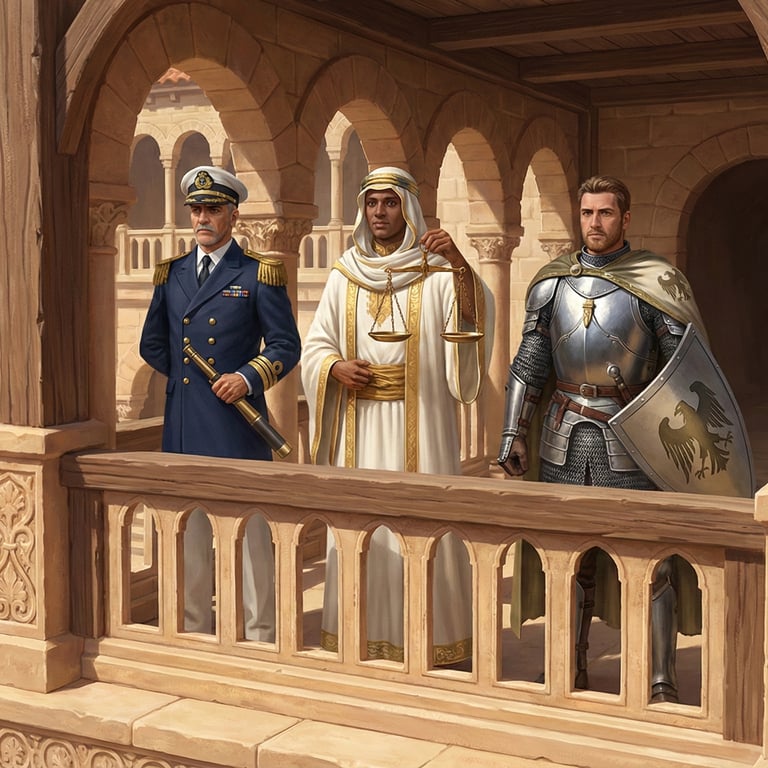
The Triumvirate of Magistrates was established to distribute power across three co-equal pillars:
The Maritime/Diplomatic: Derived from Nirethi expertise in negotiation and trade.
The Highland/Military: Rooted in the Haradi tradition of the Magenim and the defense of the interior.
The Ethical/Legal: A shared responsibility to interpret the Sajol faith through the lens of the Codex.
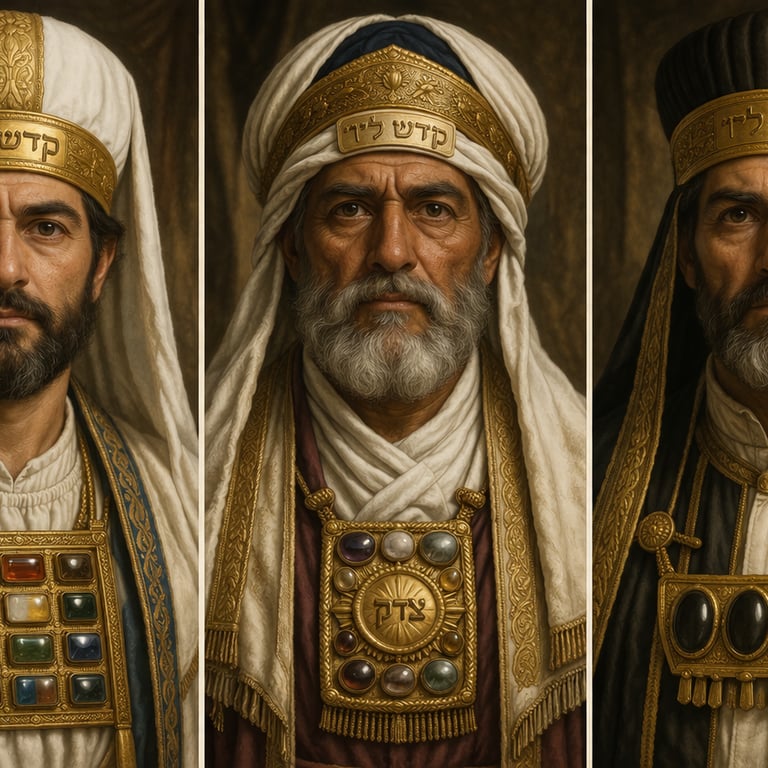
The Synod was created as the stabilizing foundation, ensuring that the staggered six-year terms prevented stagnation and kept the leadership accountable to the collective virtues of the nation.
The Era of Neutrality
In the recent centuries, Haaret has focused on internal refinement and "principled isolation." The focus shifted from territorial expansion to the perfection of craft and law.
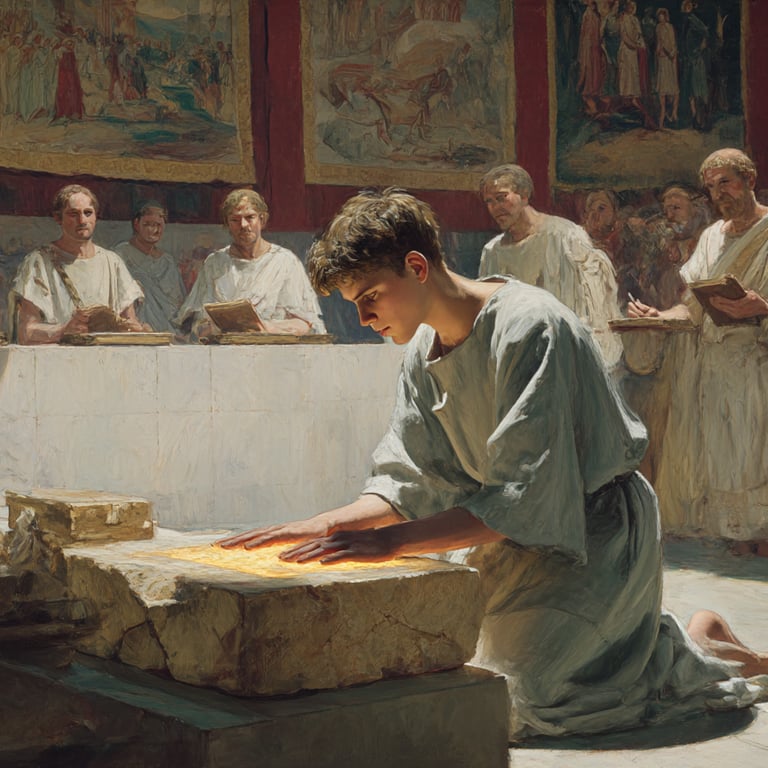
The Virtue Trials: The ancient Haradi spiritual rites were fully transformed into the modern civil service exams. These trials ensure that any individual seeking a position in a guild or the Synod has demonstrated the moral fortitude required by the state.
The Scholarly Ascendancy: Education became the primary export of Haaret. The nation’s high literacy and commitment to civic law made its legal stewards and navigators highly sought after for their reliability and ethical rigor.
Today, Haaret stands as a unified body where the Nirethi’s reasoned deliberation and the Haradi’s unshakable duty are no longer separate traditions, but the dual pulse of a single nation.