History of Haaret
Early Era – The Highland Age
Long before the founding of Haaret, the Haradi people inhabited the hills and lower slopes of the Sovereign Mountains. Their origins are unknown, but their presence is considered ancient even by their own traditions. Living in fortified stone villages and seasonal settlements, the Haradi developed a culture centered on endurance, oral law, and sacred observance.
Early Haradi society was tribal, organized around kin-clans led by elders and “word-bearers” who preserved law and memory. Their belief in divine order and balance predates formalized religion, though later traditions would identify these early practices as precursors to the Faith of Sajol.
The Coastal Arrival – Migration of the Nirethi
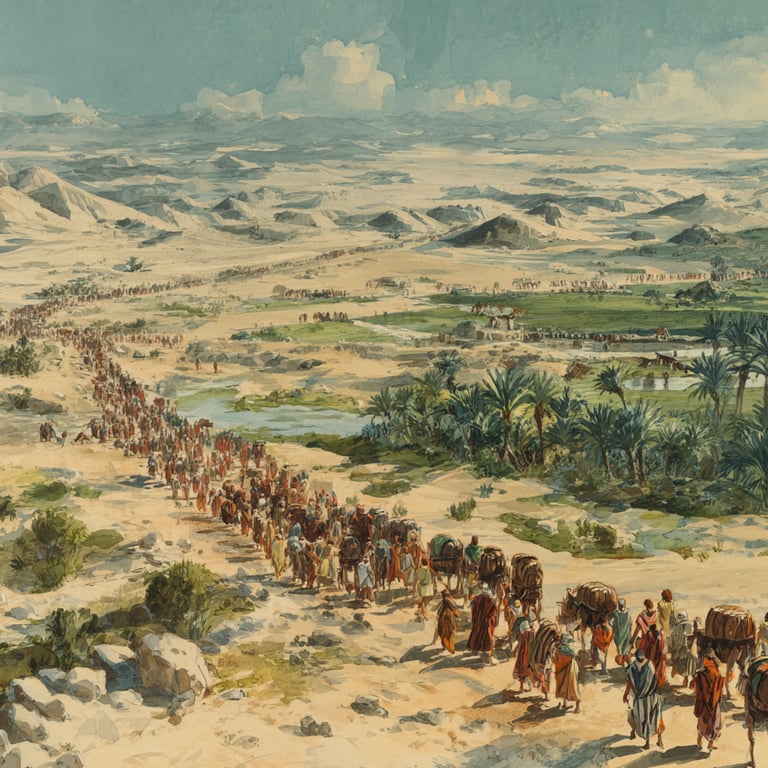
At an uncertain point in the late early era, the Nirethi arrived from a southern desert region now lost to history. Whether driven by environmental collapse, war, or divine calling is unknown, though Nirethi tradition speaks of a long exodus guided by signs in the sky.
Upon reaching the northeastern coast of North Meridia, the Nirethi found the coastal plains sparsely inhabited, with only scattered fishing communities and no organized state presence. They established the first permanent coastal settlements, including early forms of what would become Shiloh and Delamra.
Unlike the Haradi, the Nirethi quickly developed maritime trade, written recordkeeping, and structured civic organization. Their culture emphasized negotiation, contracts, and shared governance among leading families.
The Period of Division
For generations, the Nirethi and Haradi existed as separate societies.
The Nirethi dominated the coasts, building ports, trade routes, and proto-city states.
The Haradi remained in the interior, maintaining clan territories and controlling mountain passes.
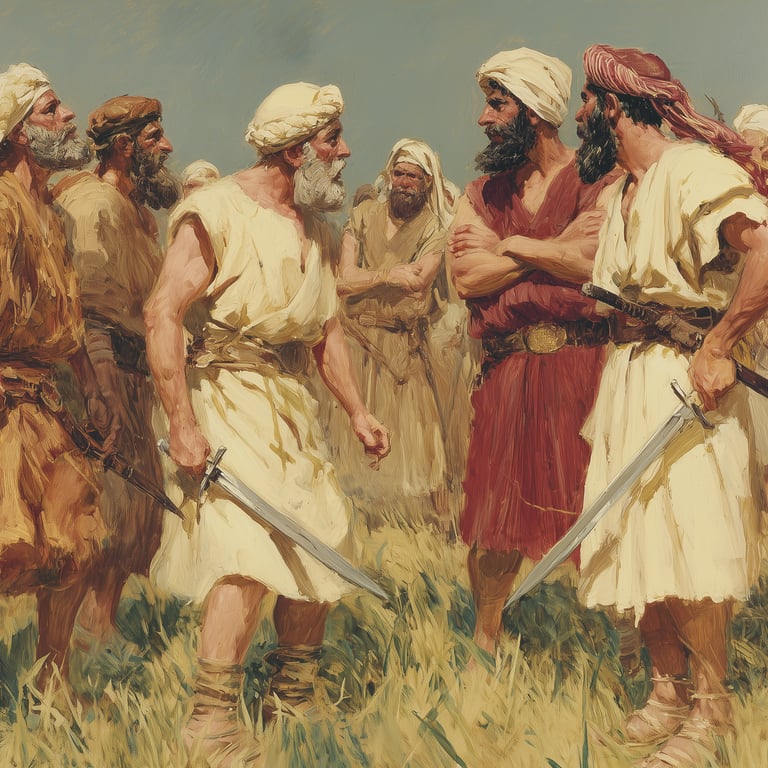
Contact between the two was limited and often tense. Trade caravans occasionally passed between them, but cultural differences—urban versus tribal, written law versus oral tradition—prevented early unification.
The First Accord
The turning point came through a gradual process rather than conquest. As Nirethi settlements expanded inland and Haradi clans sought access to coastal trade, a series of agreements were forged.
These early accords established:
Shared trade routes
Neutral market towns (early Zuarin)
Mutual defense pacts against raiders and external threats
Over time, intermarriage between coastal and highland families became more common, creating a blended elite class that understood both traditions.
The Rise of Sajolism
During this period of convergence, the teachings of the Faith of Sajol began to spread across both cultures.
Among the Haradi, Sajol’s emphasis on endurance, humility, and perseverance resonated deeply with existing traditions.
Among the Nirethi, the doctrine that actions determine divine favor aligned with their legalistic and civic worldview.
The Six Virtues provided a shared moral framework that bridged the cultural divide. Temples began to appear in both coastal cities and mountain settlements, and the first Great Luminariums were established.
Religion became the primary unifying force between the two peoples.
The Founding of Haaret
As trade expanded and threats from Tartesso and other regional powers increased, the need for a unified state became clear.
Rather than forming a monarchy, the emerging leadership—drawn from both Nirethi merchant houses and Haradi clan elders—established a new system of governance:
The Triumvirate of Judges.
This structure reflected both traditions:
Nirethi influence: codified law, rotating authority, civic administration
Haradi influence: elder oversight, moral authority, communal legitimacy
The Synod was created as a governing body combining patriarchs, elders, and military leaders, ensuring that no single group dominated the state.
Consolidation and Expansion
Following its founding, Haaret expanded steadily but cautiously.
Coastal cities were fortified and developed into trade hubs
Inland routes were secured and standardized
The first professional military (Hayara) was established to defend borders and trade
Rather than conquest, Haaret grew through integration, incorporating smaller settlements and tribes into its system through law, trade, and shared religious identity.
Modern Haaret
In the present era, Haaret stands as a stable and disciplined republic shaped by two foundational cultures:
The Nirethi, masters of trade, law, and the sea
The Haradi, guardians of tradition, endurance, and moral authority
Bound together by the Faith of Sajol and governed through the Triumvirate, Haaret has become a regional power known not for expansion, but for order, balance, and measured strength.