History of the Commonwealth of Sherran
Early Tribal Period (Pre–County Era)
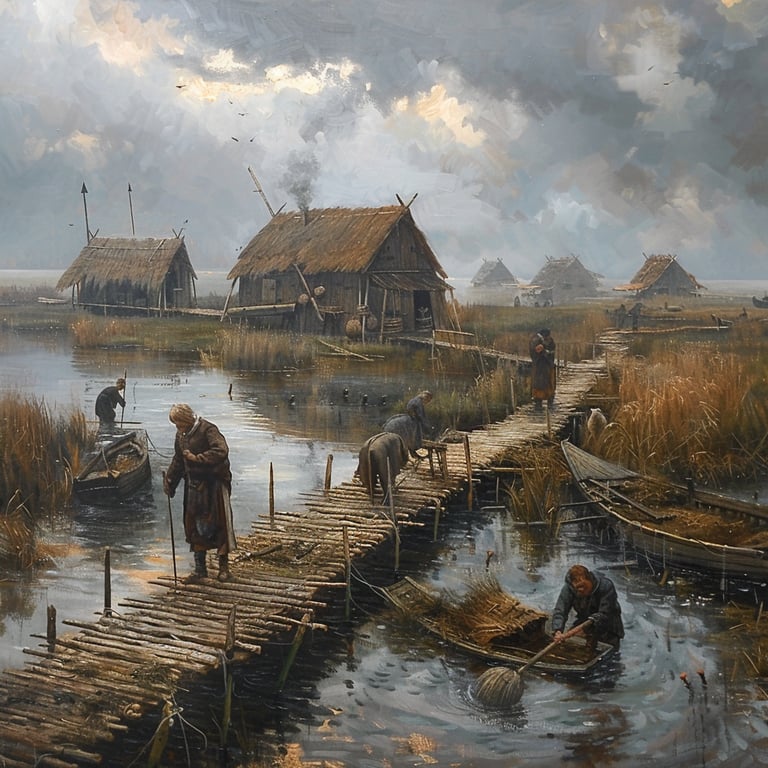
The lands that would become Sherran were originally inhabited by loosely organized coastal and marshland tribes called Fresians, culturally similar and bound by kinship, seasonal migration, and seafaring.
These tribes lived along tidal flats, river deltas, and inland marshes
Society was communal, with elected elders rather than hereditary chiefs
Early survival depended on:
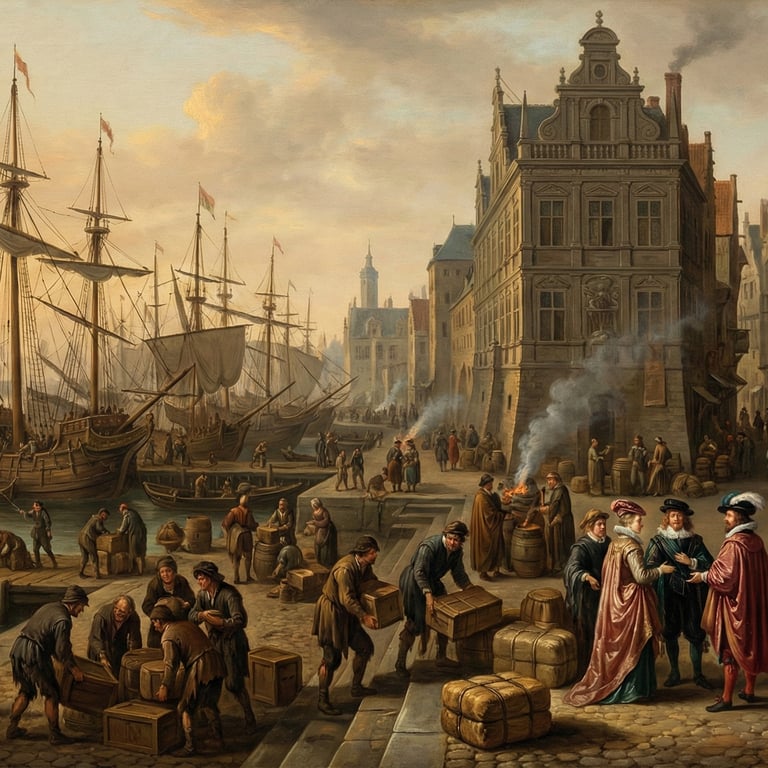
Fishing and coastal trade
Livestock grazing on reclaimed marshland
Primitive shipbuilding and rivercraft
Even at this early stage, the people showed traits that would define Sherran:
Strong independence
Collective decision-making
Practical engineering (levees, drainage, simple flood defenses)
Formation of the Three Counties
Over time, increasing population, external pressure, and trade competition led to political consolidation into three major counties:
County of Wadden (North)
A chain of coastal settlements and island communities
Focused on fishing, naval skill, and maritime defense
Produced the earliest long-range sailors and shipwright traditions
County of Sherran (Central)
The most fertile and urbanized region
Became the political and economic heartland
Early market towns evolved into proto-cities
Hosted the first large assemblies and proto-legislative councils
County of Veldmarr (South)
Rich agricultural lands and inland trade routes
Known for livestock, grain, and overland commerce
More exposed to foreign influence and land-based conflict
Each county was governed by elected magistrates and councils, not hereditary lords. This early rejection of nobility became a defining cultural norm.
The Coming of the Sanctorian Church
The arrival of the Sanctorian Church marked the first major religious transformation of the three counties, introducing a structured and hierarchical faith into a region previously guided by local traditions and communal customs.
Sanctorian missionaries arrived via southern land routes and coastal trade ports, particularly in Veldmarr, where foreign influence was strongest
The Church established:
Formal temples and clerical offices
A codified system of moral law
A hierarchical priesthood with authority beyond local councils
Tensions and Cultural Effects
Most Fresians were cautious, allowing its spread but resisting full clerical control over civic institutions
Most people viewed the Church as an external authority that threatened local autonomy. However, the rigid hierarchy of the Sanctorian system clashed with the deeply rooted traditions of local governance and communal authority.
The Age of Consolidation in Ametria
During the late Second Age, the political landscape of Ametria underwent rapid transformation. Tribal territories, clan confederations, and loosely organized regions were increasingly replaced by centralized states.
Expanding kingdoms formalized borders and law
Merchant leagues and republics emerged along key trade routes
Religious institutions began to assert power through organized political and military structures
The three counties of Wadden, Sherran, and Veldmarr, though culturally aligned, remained politically separate and increasingly vulnerable in this changing environment.
The Stellarium Crisis and the Unification Debate
The immediate catalyst for unification came with the rise of the Stellarium, the military arm of the Sanctorian Church.
Sanctorian Expansion into the Counties
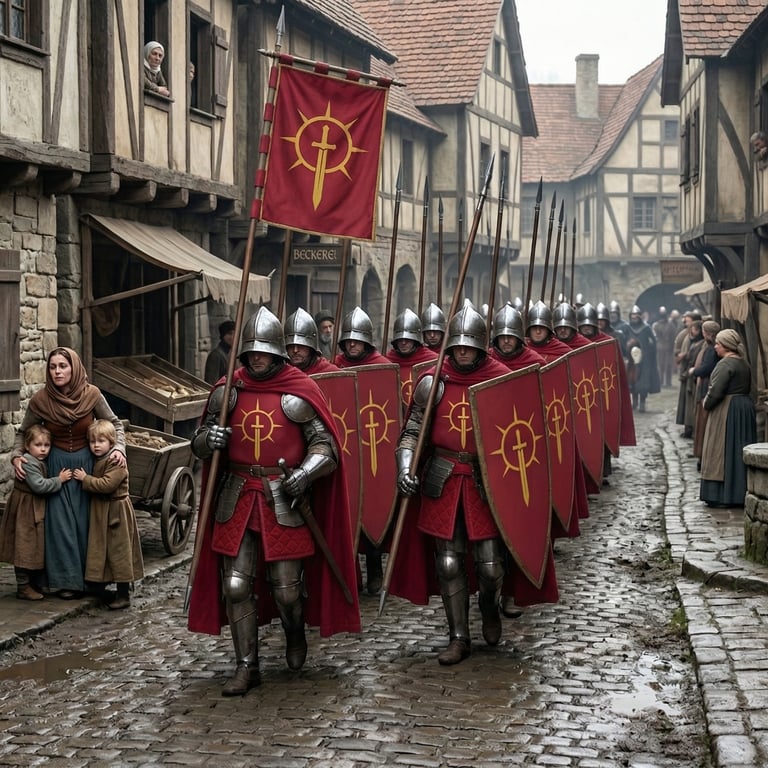
The Church, through the Stellarium, began to exert pressure on the three counties:
Establishment of fortified temple complexes and garrisons
Deployment of armed clerical forces along trade routes and coastal regions
Intervention in local disputes under the pretense of maintaining religious order
Despite differing responses, the presence of a foreign-controlled standing army created widespread alarm.
The Debate: Union or Subjugation
The Stellarium’s expansion forced a fundamental question across the counties:
Could three independent states resist a unified military force acting in the name of faith?
Arguments for Remaining Separate
Preservation of local governance traditions
Fear of central dominance by Sherran
Longstanding rivalries between counties
Arguments for Union
Necessity of coordinated defense
Protection of trade routes and ports
Prevention of permanent Stellarium occupation
Merchant guilds, militia leaders, and even segments of the clergy began to align in favor of unity.
The Turning Point
The crisis escalated when Stellarium forces attempted to:
Establish permanent garrisons in key port cities
Escort Sanctorian officials into positions of civil authority
Enforce compliance through military presence rather than negotiation
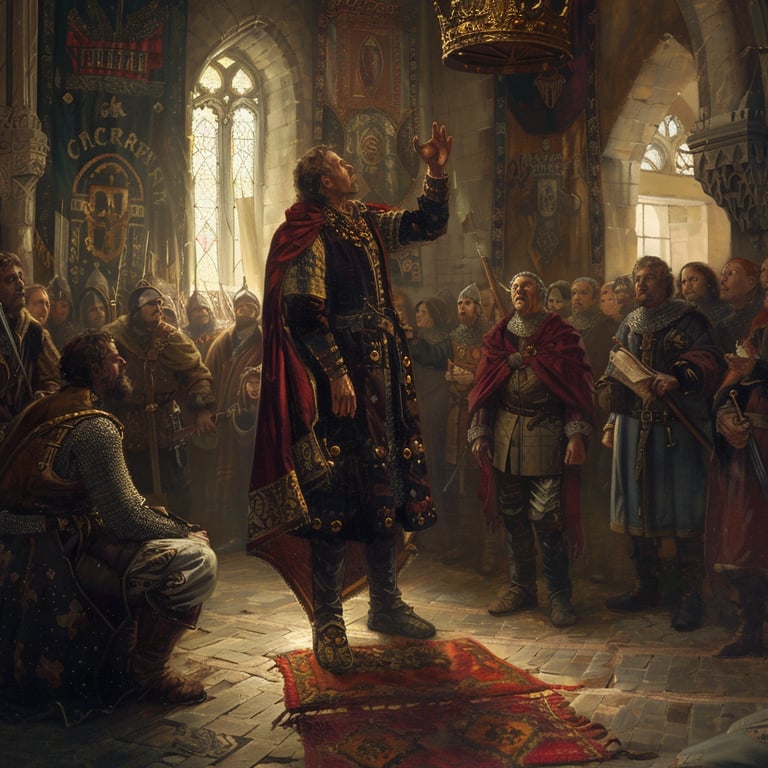
The Execution of Daison by the Sanctorian Chruch.
This marked a clear transition from influence to coercion.
In response:
Joint military councils were formed between the three counties
Fleets from Wadden and Sherran began coordinated patrols
Veldmarr committed supplies and manpower to a defensive alliance
The Compact of Three Estates
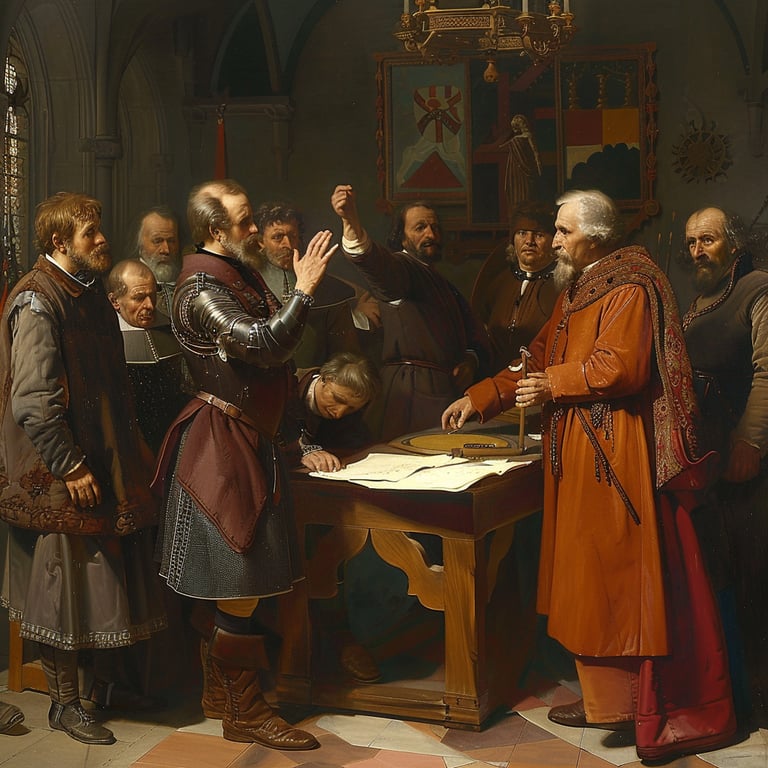
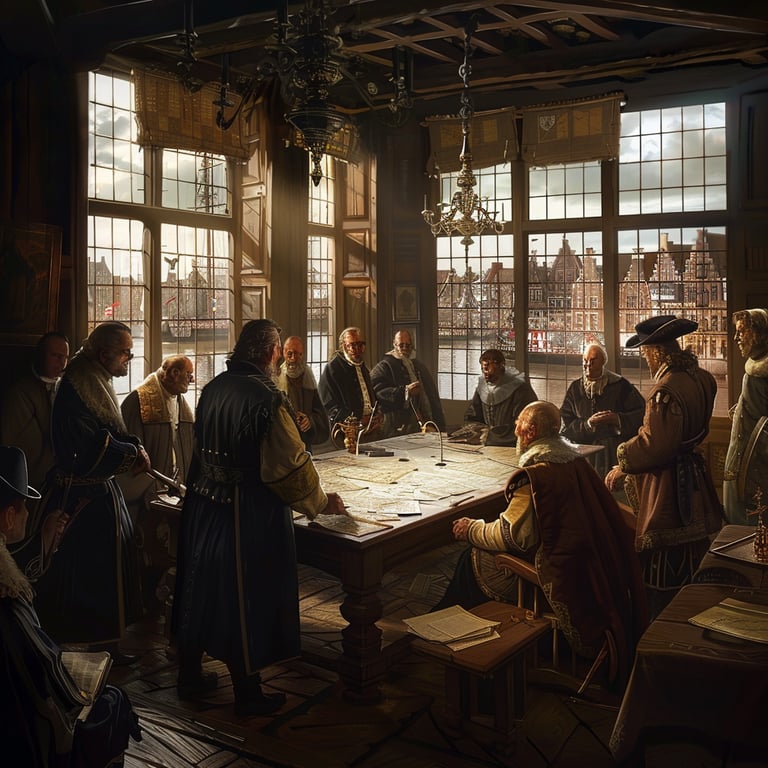
Faced with the growing threat of Stellarium control, representatives from all three counties convened and ratified the Compact of Three Estates, forming the Commonwealth of Sherran.
Key Outcomes
Political unification of Wadden, Sherran, and Veldmarr
Creation of a centralized but representative government
Establishment of a unified military command structure
Explicit rejection of foreign military authority within Commonwealth lands
Foundational Principles
No external power—religious or political—may command armed force within the Commonwealth
Defense of the land is the responsibility of its citizens, not foreign institutions
Unity is necessary to preserve both faith and sovereignty
Aftermath
The formation of the Commonwealth halted Stellarium expansion in the region:
Sanctorian forces were expelled or withdrew under pressure
The Church’s influence diminished significantly within Sherran lands due to the acceptance of the Daisonite Faith over the Sanctorian Church.
The new Commonwealth rapidly expanded its own military capabilities to prevent future incursions
The crisis is remembered as a defining moment when:
The people of three divided counties chose unity over submission—and forged a state capable of resisting both crown and creed.